What Is Trade Document Digitization and Why Does It Matter Today
Tripti Mishra
18 July 2025 · 5 Mins
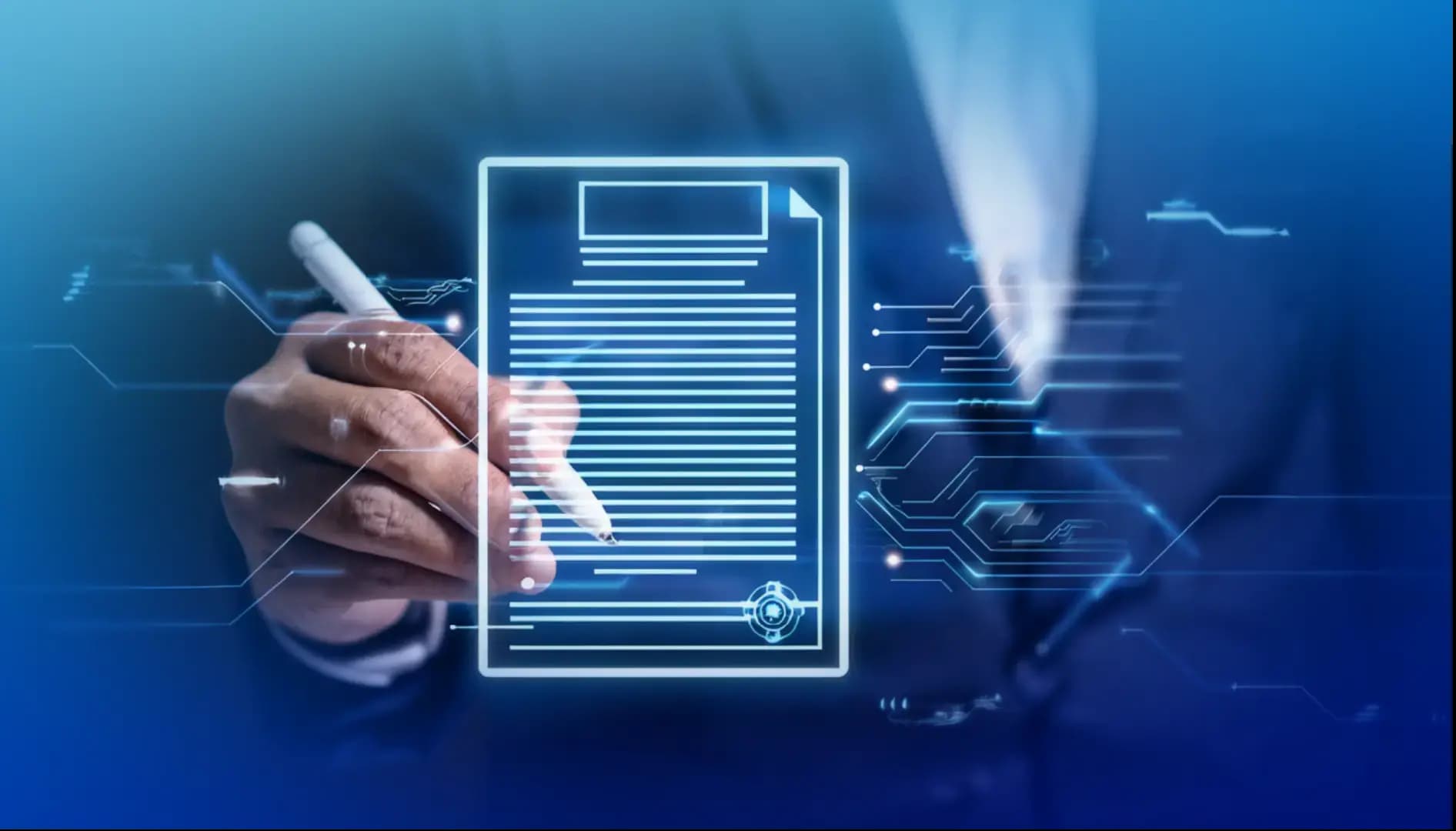
Let’s face it, global trade still runs on paper. Despite all the advancements in finance and logistics, many trade processes are still hindered by the use of physical documents, including letters of credit, bills of lading, invoices, and certificates that must be printed, signed, and couriered. In today’s fast-moving world, that’s a serious bottleneck.
The World Bank has found that digitizing trade documentation could cut transaction costs by up to 15%, freeing up both time and capital across the global supply chain. When you consider that global trade exceeded $25 trillion in 2022, even a small shift in efficiency can unlock billions in value.
So, what exactly is trade document digitization, why is it more relevant than ever in 2025, and how does Trademo TradeScreen help you turn a pain point into a competitive edge?
Understanding Trade Document Digitization
Trade document digitization involves converting paper-based or unstructured trade documents into structured, machine-readable data. It uses a combination of technologies such as Optical Character Recognition (OCR), Artificial Intelligence (AI), and Machine Learning (ML) to extract and interpret information from documents like:
- Commercial Invoices
- Bills of Lading (BoL)
- Letters of Credit (LCs)
- Certificates of Origin
- Packing Lists
But it’s more than just scanning a document. True digitization means auto-classifying document types, extracting key data fields with high accuracy, and integrating that information into downstream systems, from compliance checks to ERP systems and trade finance workflows.
In fact, companies that implement robust digitization tools report a 95%+ accuracy in field extraction, significantly reducing the manual effort in validation and data entry. This not only cuts operational costs but also improves turnaround time and audit readiness.
Why It Matters Right Now
1. Efficiency and Speed in Processing
Manual handling of trade documents slows down transaction cycles. Physical transport of documents between banks, customs brokers, freight forwarders, and buyers can take days, even weeks. By digitizing trade documents, businesses can shrink these timelines dramatically.
According to World Bank data, digitized trade procedures can reduce transaction costs by up to 15%, thanks to faster document validation, reduced human error, and elimination of rework. In the trade finance context, this means faster access to working capital, better cash flow, and improved supplier relationships.
2. Enhanced Compliance and Risk Mitigation
Trade finance is under increasing regulatory scrutiny, from anti-money laundering (AML) to sanctions and dual-use goods compliance. Traditional manual methods struggle to keep up. Digitization, powered by AI and compliance rule engines, enables automated validation against thousands of regulatory parameters.
The Financial Action Task Force (FATF) has flagged trade-based money laundering (TBML) as one of the least detected forms of illicit finance. That’s why financial institutions are adopting tools like Trademo TradeScreen, which performs over 1,000 automated compliance checks on every transaction, covering everything from document mismatches to vessel sanctions and goods classification.
3. Reducing Errors and Enhancing Auditability
With manual data entry, even small mistakes—like transposed invoice numbers or missing certificate references—can delay shipments and trigger disputes. Digitization reduces these errors at scale. By achieving near-perfect field-level accuracy, systems can flag discrepancies in real-time and offer audit trails for every action taken.
In one instance, a European logistics firm using TradeScreen saw a 70% drop in false positives in its trade compliance checks, freeing up compliance teams to focus on genuine high-risk cases rather than sifting through noise.
4. Enabling Scalability and Growth
For financial institutions and corporates, the ability to scale transaction volumes without proportionally increasing manpower is crucial. Digitization makes that possible. Automated systems can handle thousands of trade transactions in parallel, supporting growth without compromising on speed or quality.
This is especially important in markets like India, where the government aims to reduce logistics costs from 13% of GDP to 9% by 2030. Achieving this ambitious goal will require end-to-end digitization of trade documentation and logistics processes.
The Trademo TradeScreen Advantage
Trademo TradeScreen is purpose-built for the complexities of trade finance documentation. Here’s how it delivers value to compliance teams, trade operations, and financial institutions:
a. Smart Document Ingestion
TradeScreen uses advanced OCR and proprietary vision models to extract structured data from multiple trade document formats. Whether it’s a scanned letter of credit or a PDF invoice, the tool delivers over 95% accuracy in field recognition, even across varying formats and layouts.
b. Comprehensive Compliance Screening
Every document run through TradeScreen undergoes more than 1,000 regulatory checks. This includes UCP 600, ISBP 821, country-specific import/export rules, OFAC sanctions, and dual-use goods detection. The platform flags any mismatches, missing documents, or risks and assigns a transaction risk score for easy triaging.
c. Real-Time Risk Scoring and Workflow Automation
TradeScreen not only flags issues but also empowers users with configurable workflows. Set thresholds for automatic approvals or escalate based on specific red flags. This maker-checker model ensures internal controls while drastically reducing turnaround times.
d. Seamless Integration
TradeScreen can ingest documents via API, SFTP, or drag-and-drop uploads. Its API-first architecture allows for smooth integration with ERP systems, core banking platforms, and logistics dashboards. This means digitized data can automatically flow into downstream systems for reporting, financing, or customs clearance.
e. Full Audit Trail and Regulatory Reporting
Every compliance check, data extraction, and workflow decision is logged in the platform, creating a complete audit trail. This supports internal governance, external audits, and regulatory examinations, providing peace of mind to financial institutions.
Conclusion:
Digitization of trade documents isn’t just about technology. It’s about preparing for the future of trade finance. As governments and multilateral institutions push for digital standards—like the UK’s Electronic Trade Documents Act or UNCITRAL’s Model Law on Electronic Transferable Records—businesses that adopt early will have a competitive edge.
And it’s not just about compliance or cost savings. It’s about enabling faster trade cycles, improving supplier relationships, unlocking trapped liquidity, and scaling operations globally. Platforms like Trademo TradeScreen bring this vision to life, helping businesses digitize confidently, securely, and efficiently.
In today’s competitive and regulated environment, the question isn’t whether to digitize. It’s how fast you can make the shift.
See it on your own transactions
Screening, examination, and decisioning with AI — inside your trade workflow, with the reasoning attached.