
Screen the Vessel, Not Just Its Name
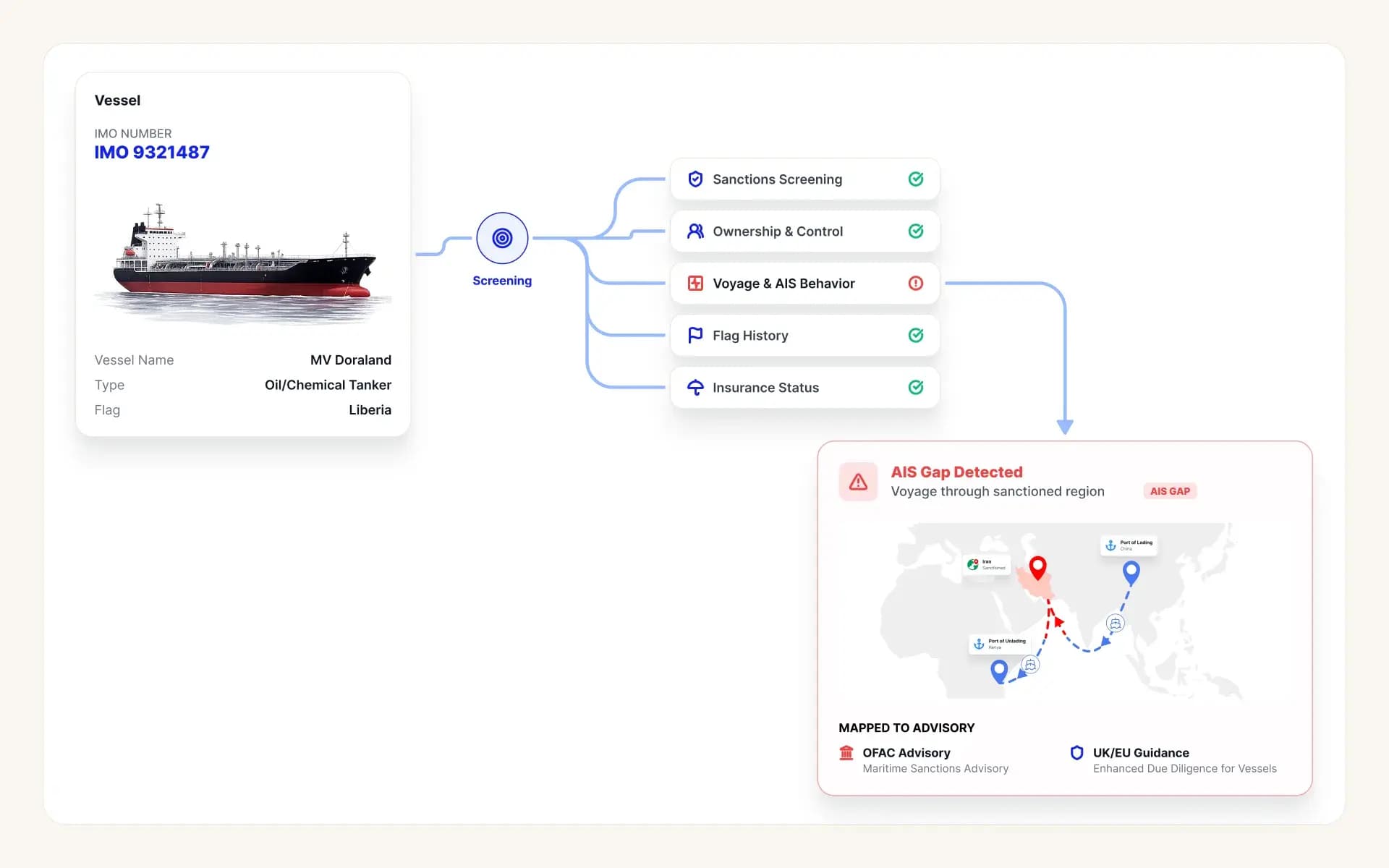
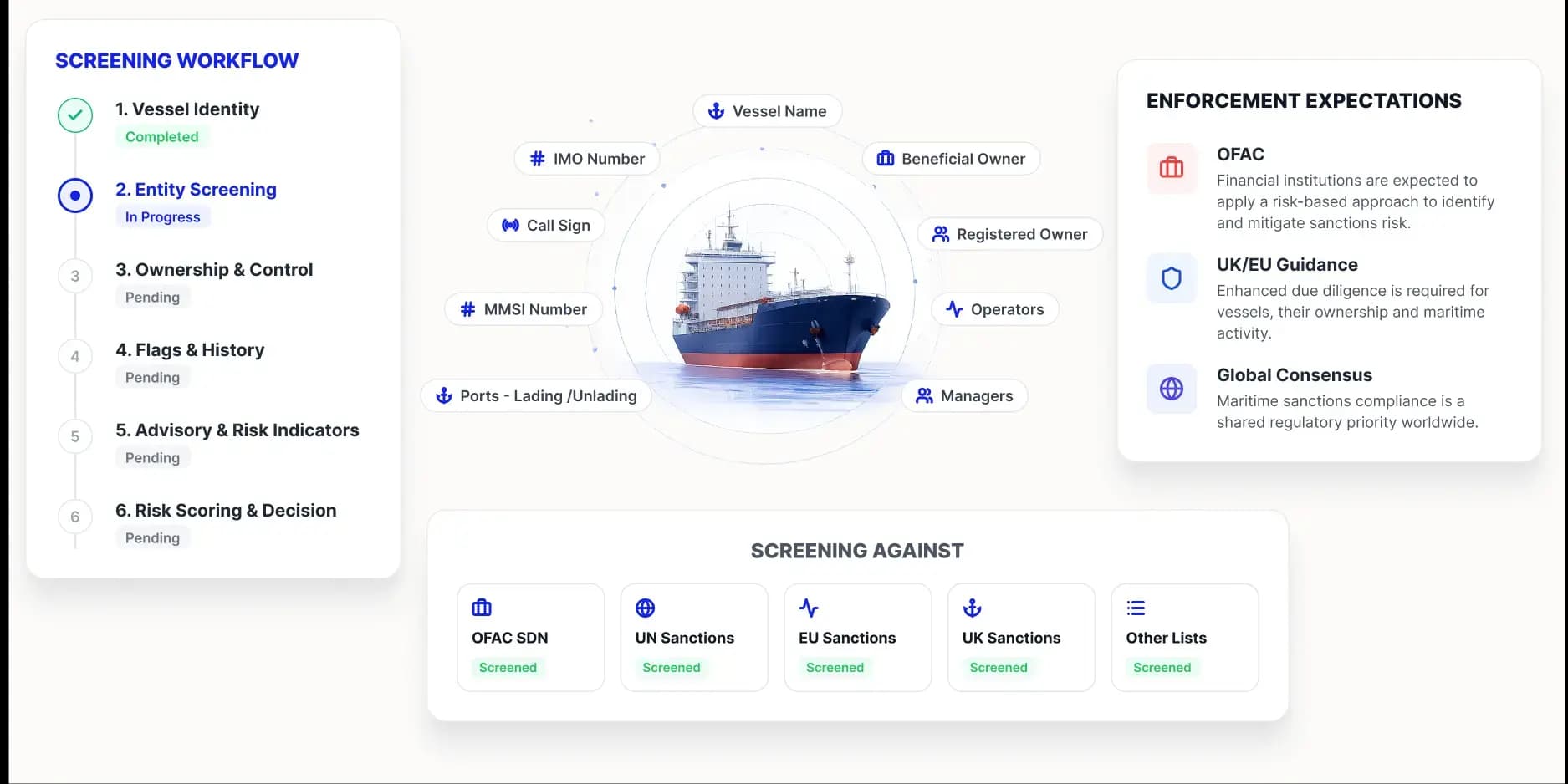
ArgusTrade resolves every vessel to its IMO number and screens sanctions status, ownership, flag history, ports, and voyage activity using maritime intelligence. Every finding includes supporting evidence and references to applicable OFAC and UK/EU maritime guidance.
Why banks use ArgusTrade
IMO-based vessel identification
ArgusTrade resolves every vessel to its IMO number before screening. This eliminates ambiguity caused by vessel renaming, duplicate names, or ownership changes and ensures screening is performed against the correct vessel.
Maritime intelligence beyond sanctions lists
Evaluate vessel ownership, management, flag history, AIS activity, ship-to-ship transfers, and voyage behavior alongside sanctions screening to identify higher-risk maritime activity.
Guidance-aligned findings
Every finding is mapped to relevant OFAC and UK/EU maritime advisories with supporting evidence, allowing compliance teams to investigate and document decisions consistently.
Integrated trade risk assessment
Maritime findings are evaluated alongside sanctions screening, goods screening, and TBML analytics within the same transaction, providing a complete compliance view.
The maritime compliance challenge
Maritime risk extends beyond vessel sanctions lists. Screening vessel names alone provides limited visibility into maritime sanctions risk. Vessel identity, ownership, routing, and voyage behavior all contribute to the overall compliance assessment.
Vessel names are unreliable
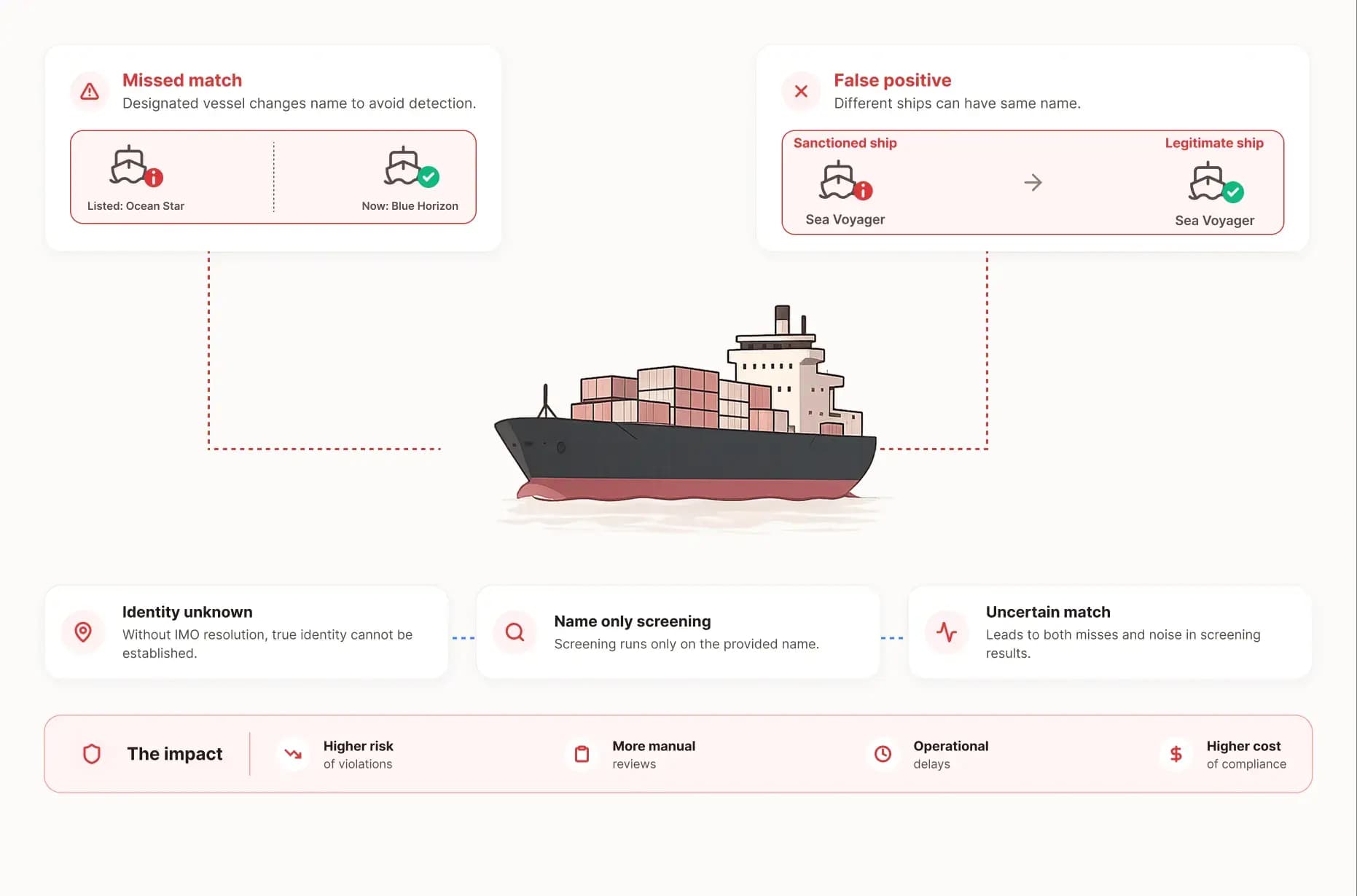
Vessels may be renamed during their operational life, while different vessels can share similar names. Accurate screening requires IMO-based identification rather than name matching alone.
Ownership structures create additional risk
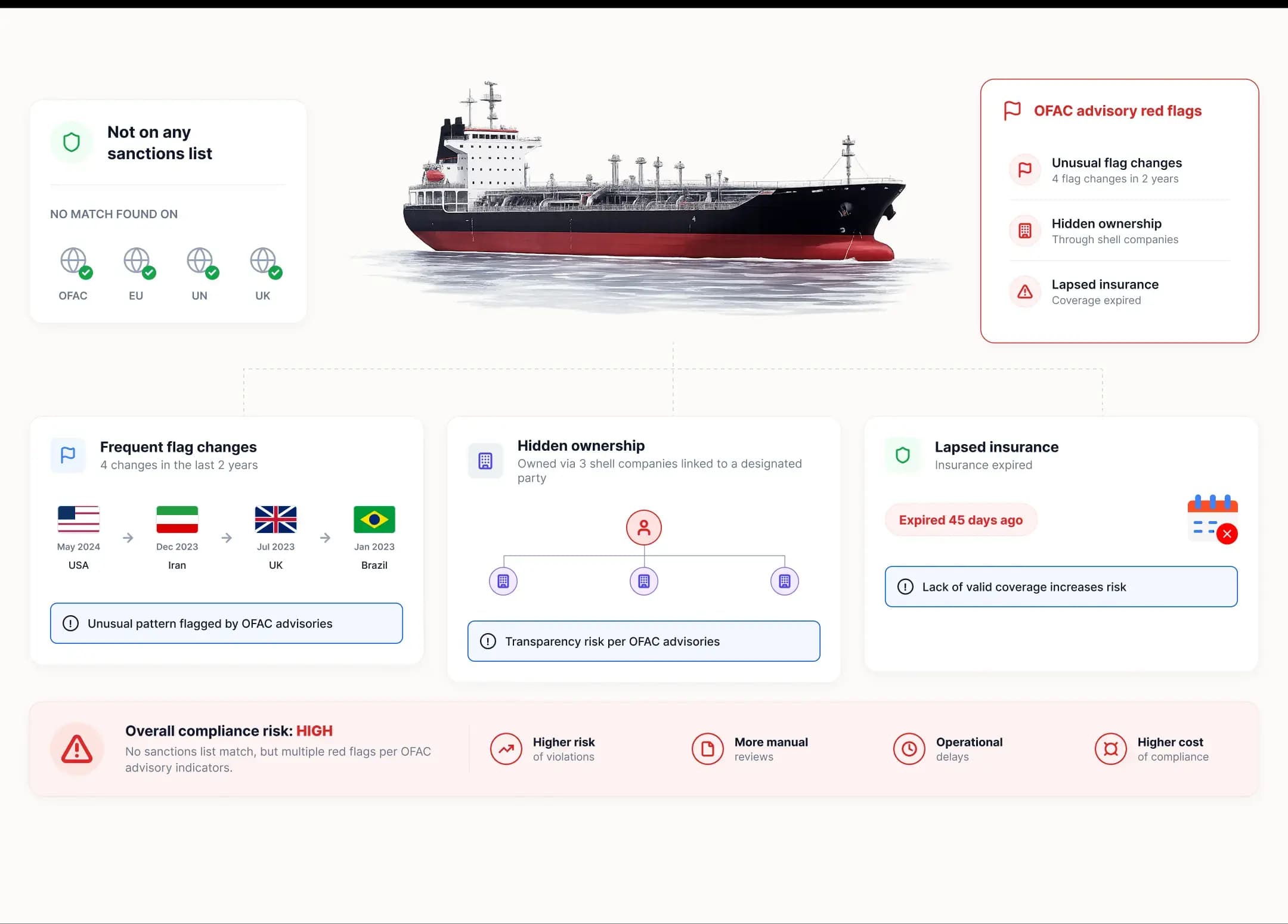
Ownership and management relationships, frequent flag changes, insurance status, and carrier relationships can all indicate elevated sanctions exposure even when the vessel itself is not designated.
Voyage activity provides additional evidence
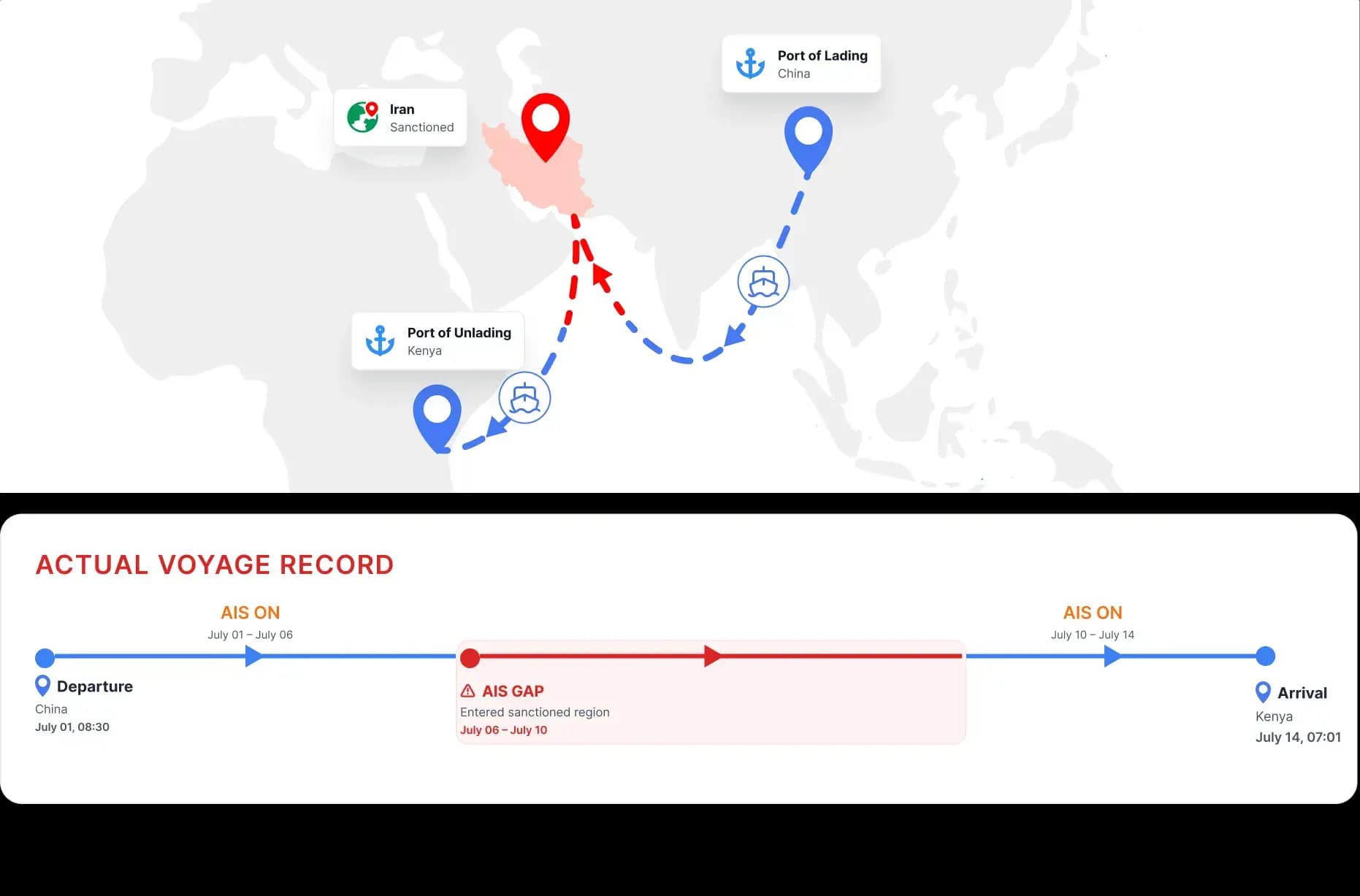
AIS gaps, ship-to-ship transfers, undeclared port calls, and unusual voyage patterns may indicate sanctions evasion or deceptive shipping practices.
Ports and routing matter
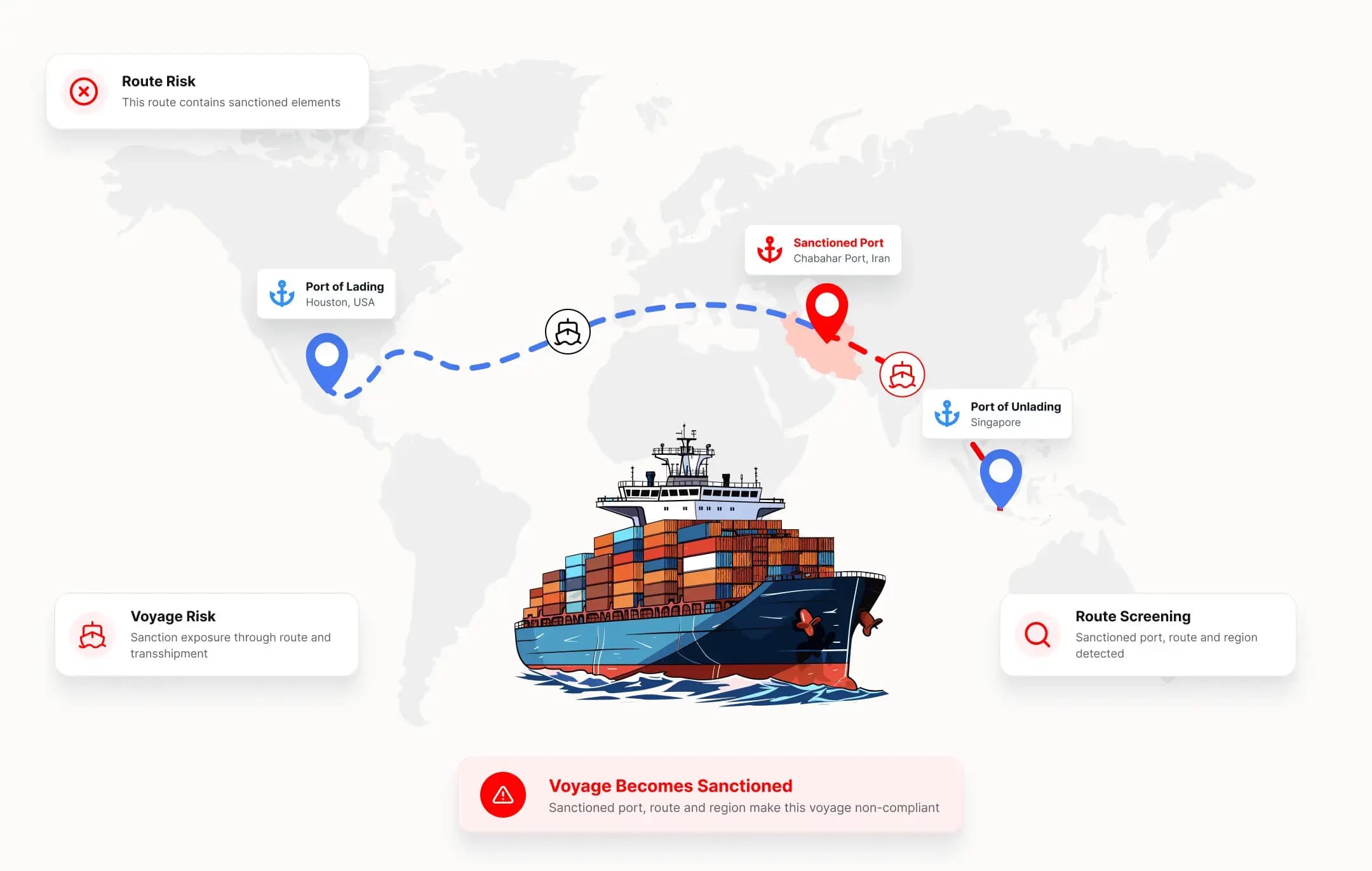
Sanctioned ports, embargoed regions, and diversion-risk corridors create compliance risks that cannot be identified through vessel screening alone.
Manual investigation is time-consuming
Investigating vessel ownership, voyage history, and maritime intelligence manually is difficult within trade finance processing timelines.
Regulatory expectations continue to evolve
Financial institutions are increasingly expected to demonstrate structured maritime sanctions controls aligned with OFAC and UK/EU guidance.
Better maritime risk decisions
Screen every vessel
Resolve every vessel to its IMO identity and evaluate sanctions status, ownership, routing, and voyage activity across every transaction.
Improve vessel identification
Reduce false positives and missed matches through IMO-based identity resolution rather than vessel name matching.
Identify deceptive maritime practices
Detect AIS gaps, ship-to-ship transfers, unusual routing, and other indicators associated with sanctions evasion.
Evaluate route risk
Identify sanctioned ports, embargoed regions, and diversion-risk routing before trade finance commitments are completed.
Support consistent investigations
Provide investigators with ownership structures, voyage history, movement data, and regulatory guidance alongside every finding.
Maintain a complete audit trail
Record every screening event, evidence source, reviewer action, and final decision for every maritime investigation.
Proven results
The maritime screening engine
Vessel identification and resolution
Extract vessel names, IMO numbers, carriers, ports, and voyage details from trade documents. Resolve every vessel to its IMO identity while identifying inconsistencies between document information and registry records.
Vessel sanctions and ownership screening
Screen vessels by IMO number while evaluating ownership structures, management companies, flag history, carrier relationships, and insurance information against applicable sanctions requirements.
Voyage analytics
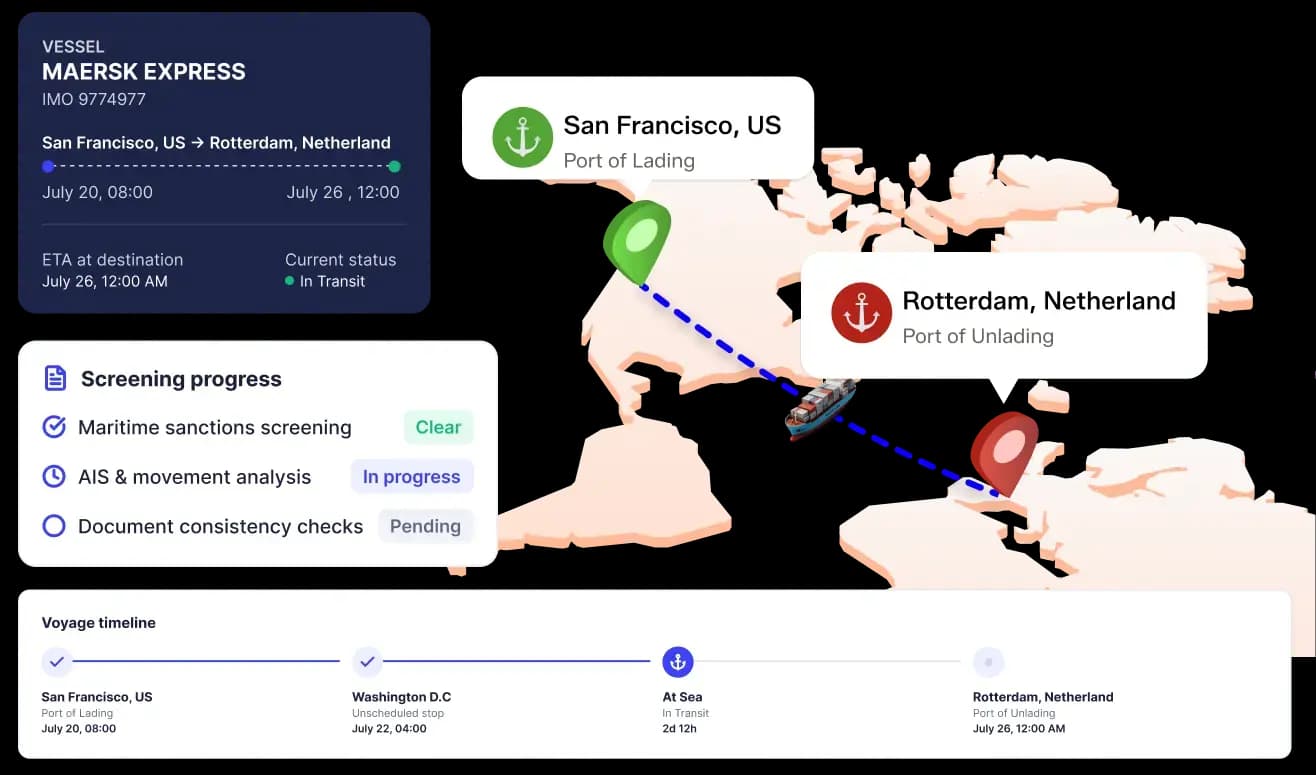
Analyze AIS activity, ship-to-ship transfers, voyage history, port calls, and routing behavior to identify indicators associated with maritime sanctions evasion.
Port and route screening
Evaluate ports of loading, discharge, and transshipment against sanctioned ports, restricted regions, and higher-risk maritime corridors.
Workflow controls and audit
Support configurable approval gates, investigation workflows, and maker-checker controls. Every finding includes supporting evidence, movement history, ownership information, and applicable regulatory references.
How it works
- Vessel name
- MV Horizon
- IMO
- 9412771
- Carrier
- OceanBridge Shipping
- Voyage
- Bandar Abbas → LA
- Registry name
- MV Aurora (prev.)
- AIS gap
- 72h · Gulf
- Flag history
- 4 flags / 2y
- Owner
- 3-shell chain
Extract and resolve
ArgusTrade extracts vessel names, IMO numbers, ports, carriers, and voyage information from trade documents. Every vessel is resolved to its IMO identity before screening begins.
Screen vessels and voyages
The resolved vessel is evaluated against sanctions lists, ownership structures, management relationships, flag history, voyage activity, AIS behavior, and port restrictions using maritime intelligence.
Review and decide
Findings are combined with the transaction's sanctions, goods, and TBML assessments to support a single risk decision. Compliance teams review supporting evidence, approve, escalate, request additional information, or block the transaction where required.
Monitor and report
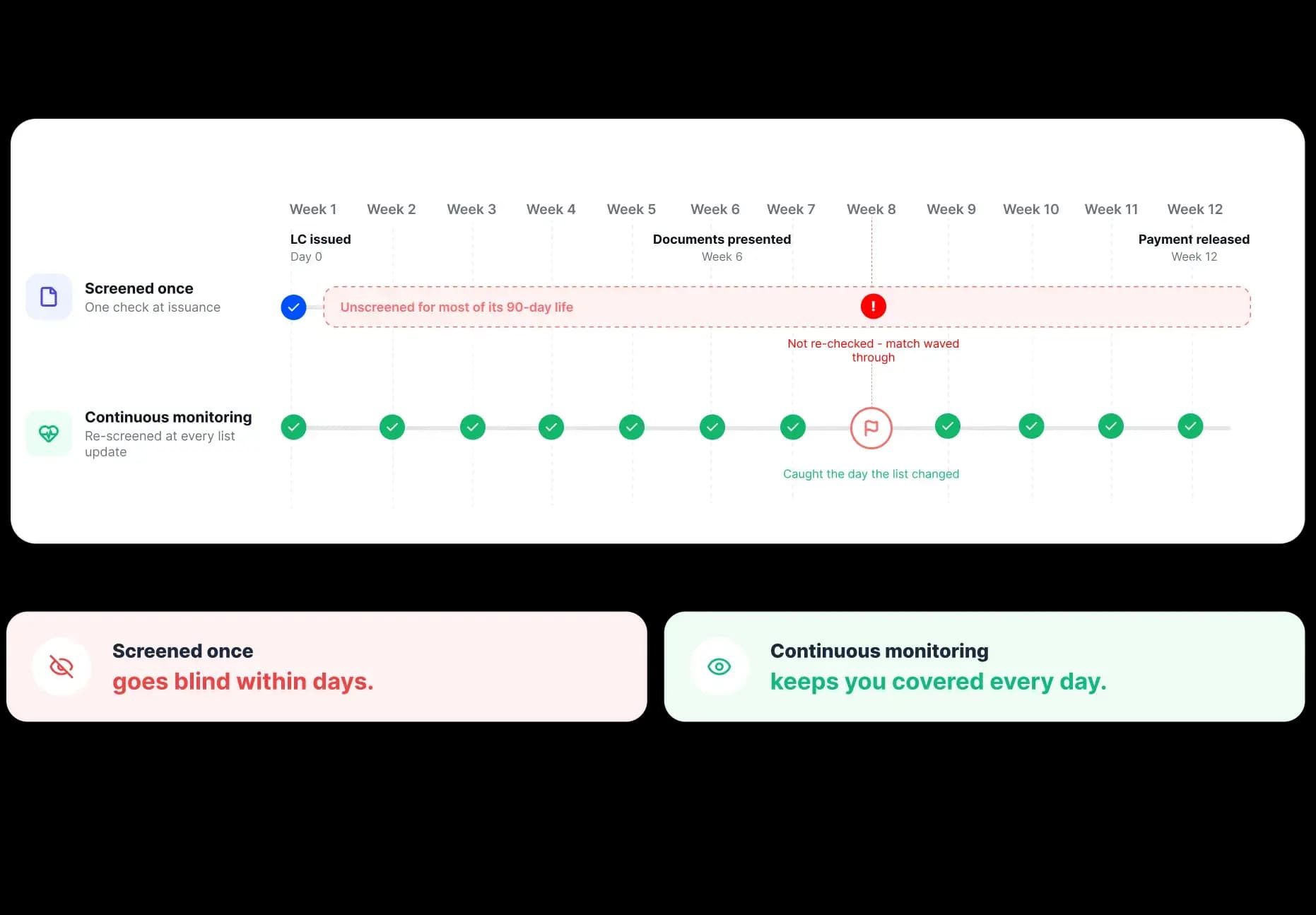
Transactions remain under monitoring until completion. Updated sanctions data and maritime intelligence automatically trigger re-screening where applicable, while every screening event and reviewer action is retained within the audit record.
See how ArgusTrade screens vessels and maritime risk
Bring a real trade transaction. We'll show how ArgusTrade resolves vessel identities, evaluates maritime sanctions risks, and combines vessel intelligence with trade compliance workflows.