
Turn SBLC requests into issuance-ready MT760s
ArgusTrade reads the SBLC application, underlying transaction documents, and beneficiary wording in one workflow. It reconciles the information across them, runs issuance checks against ISP98, and prepares the MT760 for officer review and release.
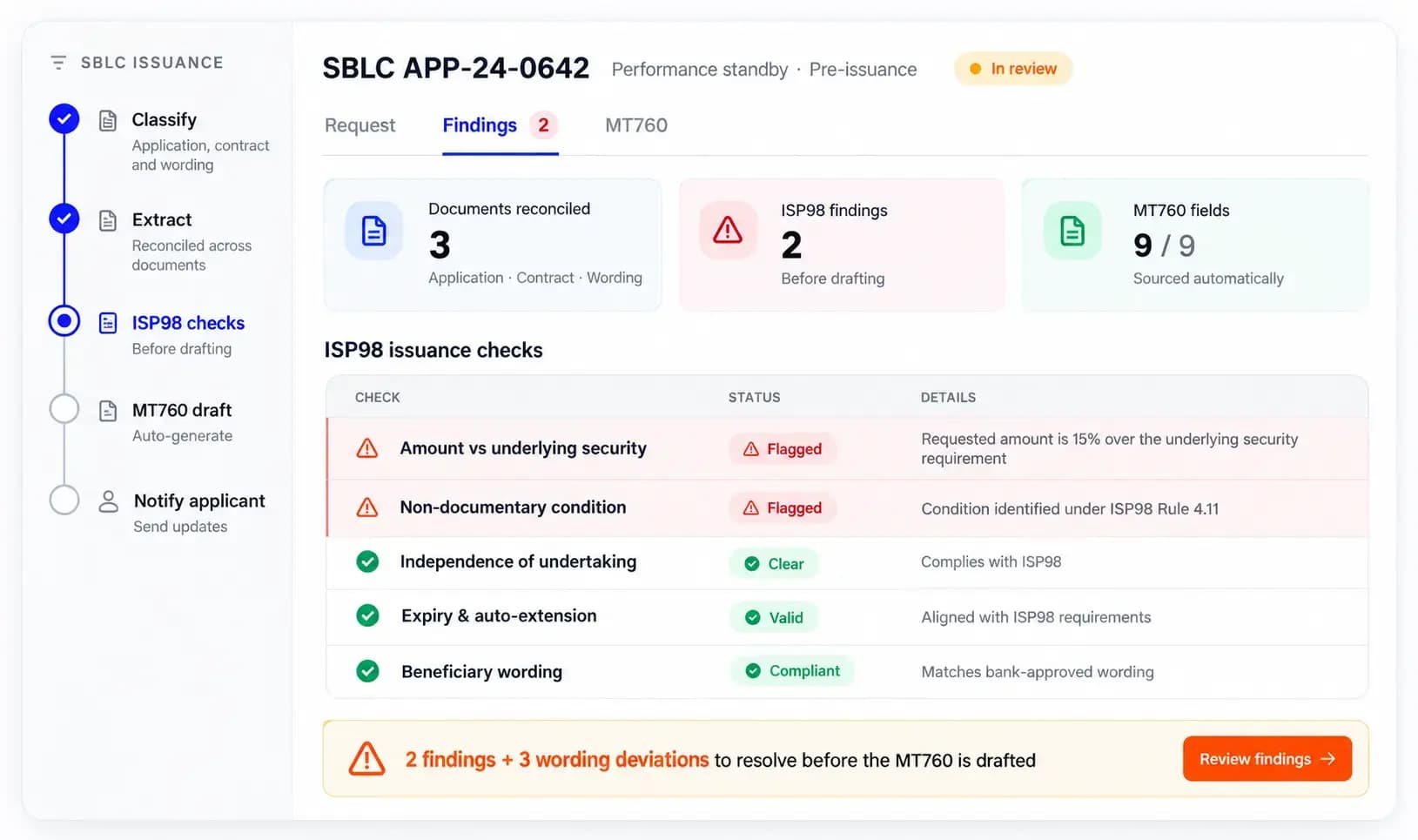
SBLC issuance requires banks to work across multiple documents
Three documents, one undertaking
An SBLC request can involve the application, the contract or transaction being secured, and beneficiary-specified wording — all of which have to be brought together before anything can be issued.
The amount is checked by hand
Verifying that the requested undertaking matches the security the underlying transaction actually calls for means a credit officer reading two documents side by side.
Wording review is slow
Beneficiary-specified clauses are reviewed as one undifferentiated block of legal text, and rule-related issues depend on scarce, experienced officers to spot.
Chasing the applicant stalls the file
Missing information is resolved through generic resubmission requests and calls to the branch before the SWIFT message can even be drafted.
From SBLC request to issuance-ready MT760
Classify all three documents, extract and reconcile the facts, check against ISP98, and draft the MT760 — one continuous pass, in that order, keeping the applicant in sync at every step.
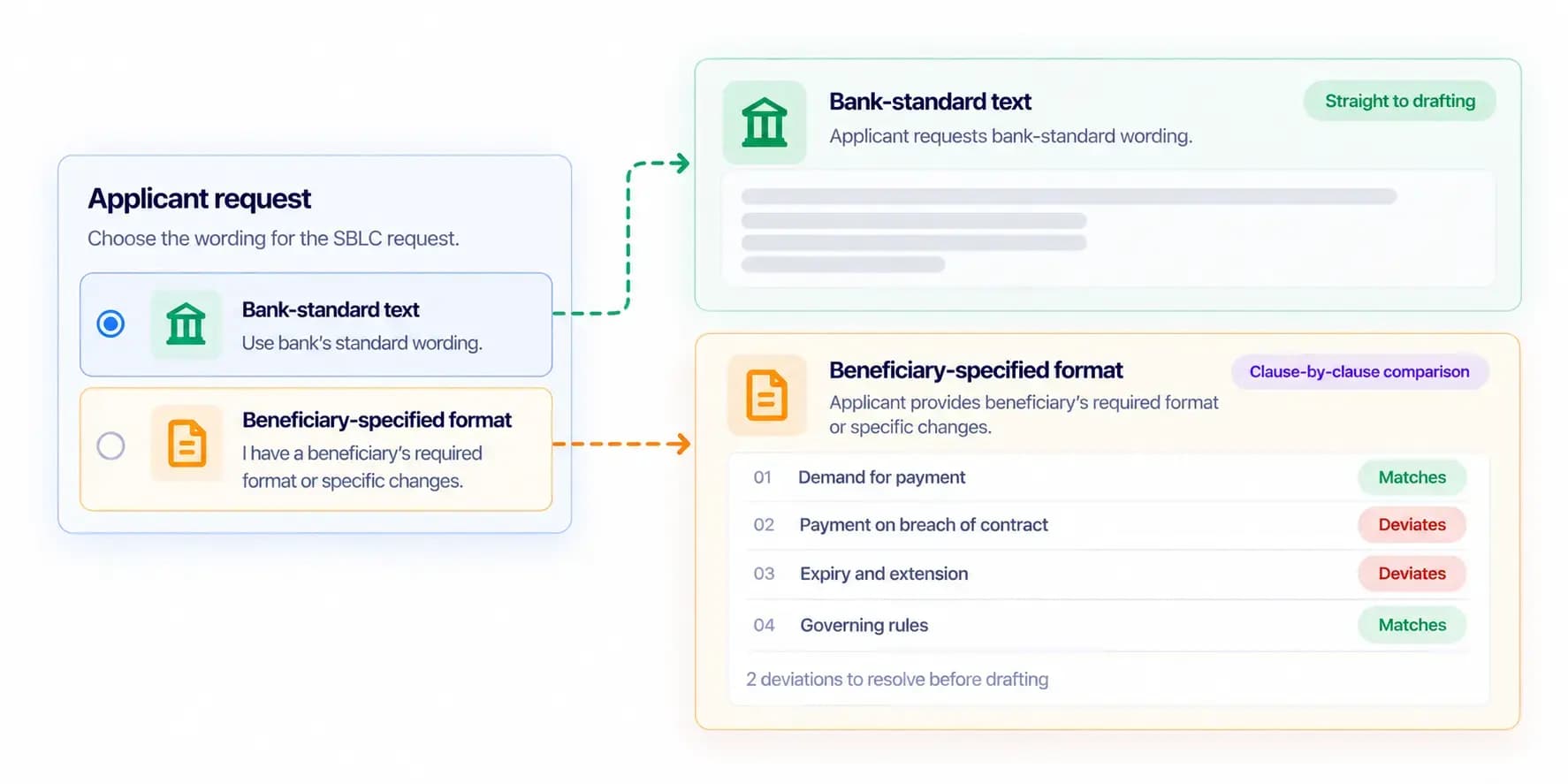
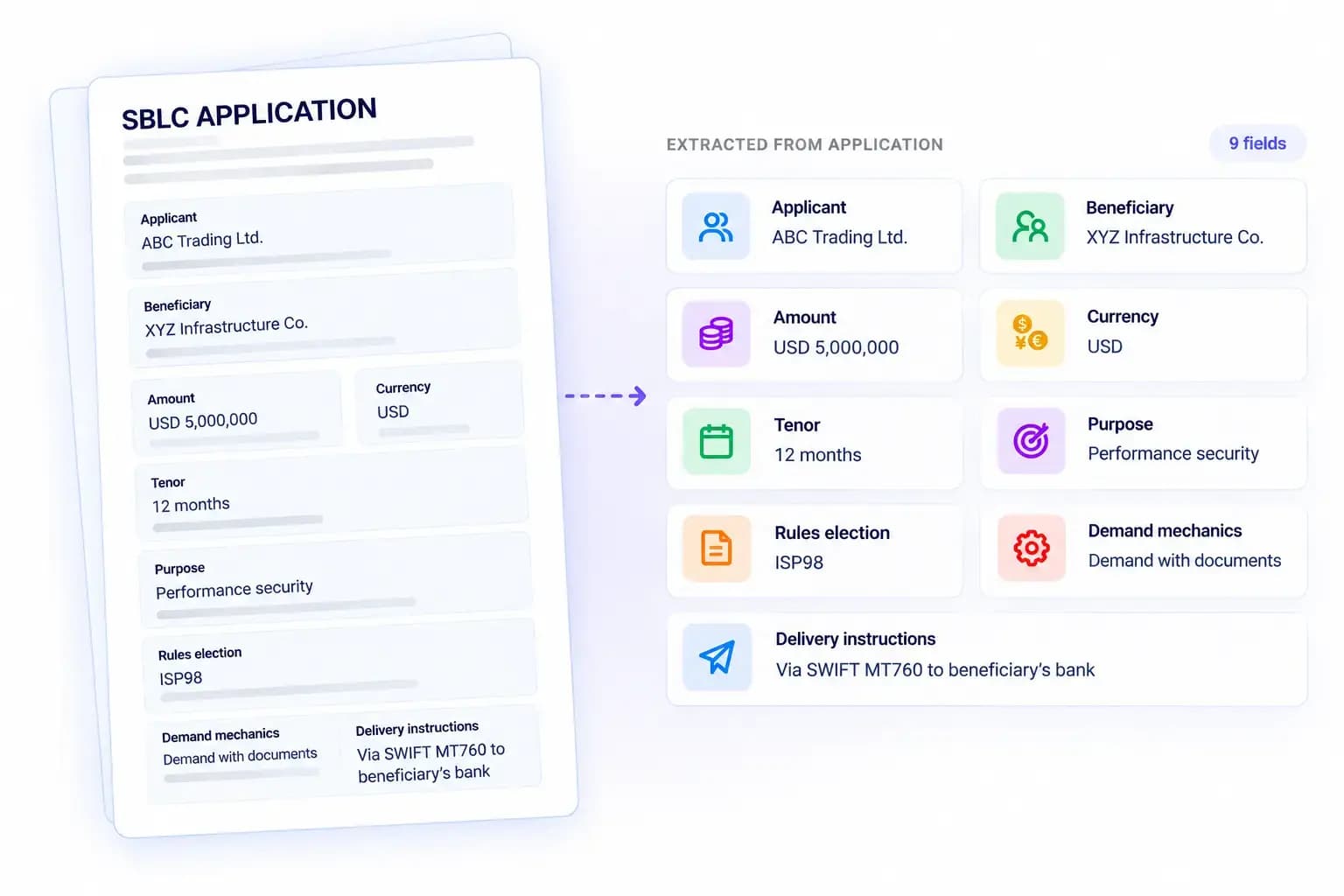
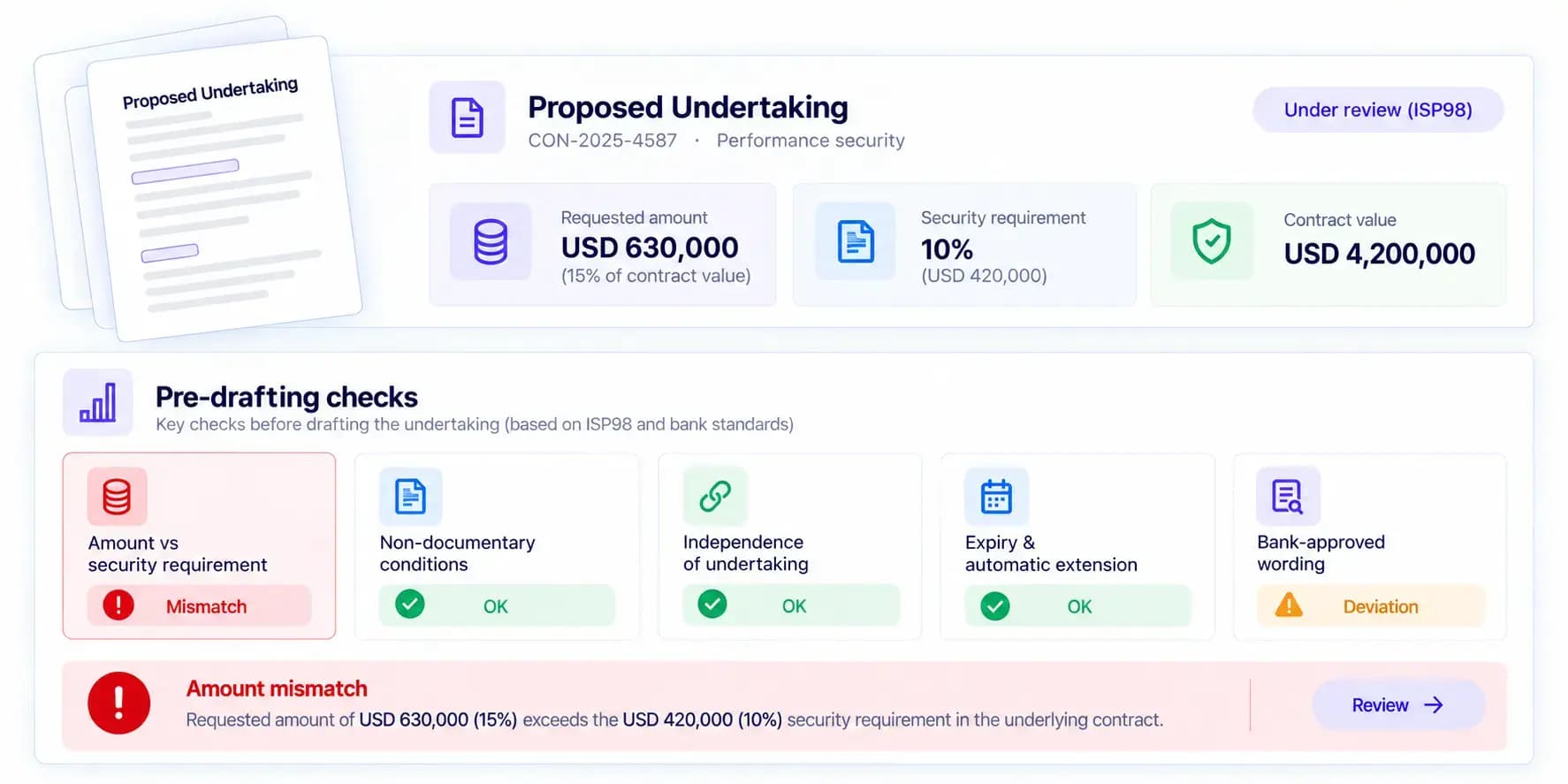
Classify the complete request
Identify and route the SBLC application, the underlying contract or transaction documents, and any beneficiary-specified wording. ArgusTrade also determines whether the request can follow bank-standard wording or requires a clause-level review of the beneficiary's format before drafting.
Extract and reconcile issuance data
Read the complete request package into one structured case record: parties, amount, currency, tenor, purpose, applicable rules, demand terms, security requirements, contract value, and the obligation being secured. Beneficiary-provided clauses are captured individually, information is reconciled across documents, and inconsistencies and low-confidence fields are surfaced for officer verification.
Run issuance checks
Check the proposed undertaking against ISP98 before it reaches drafting — the requested amount against the underlying security requirement, non-documentary conditions, independence of the undertaking, expiry and auto-extension terms, and any deviations from bank-approved wording. Where a deviation is identified, officers review the issue and the bank's acceptable alternative before proceeding.
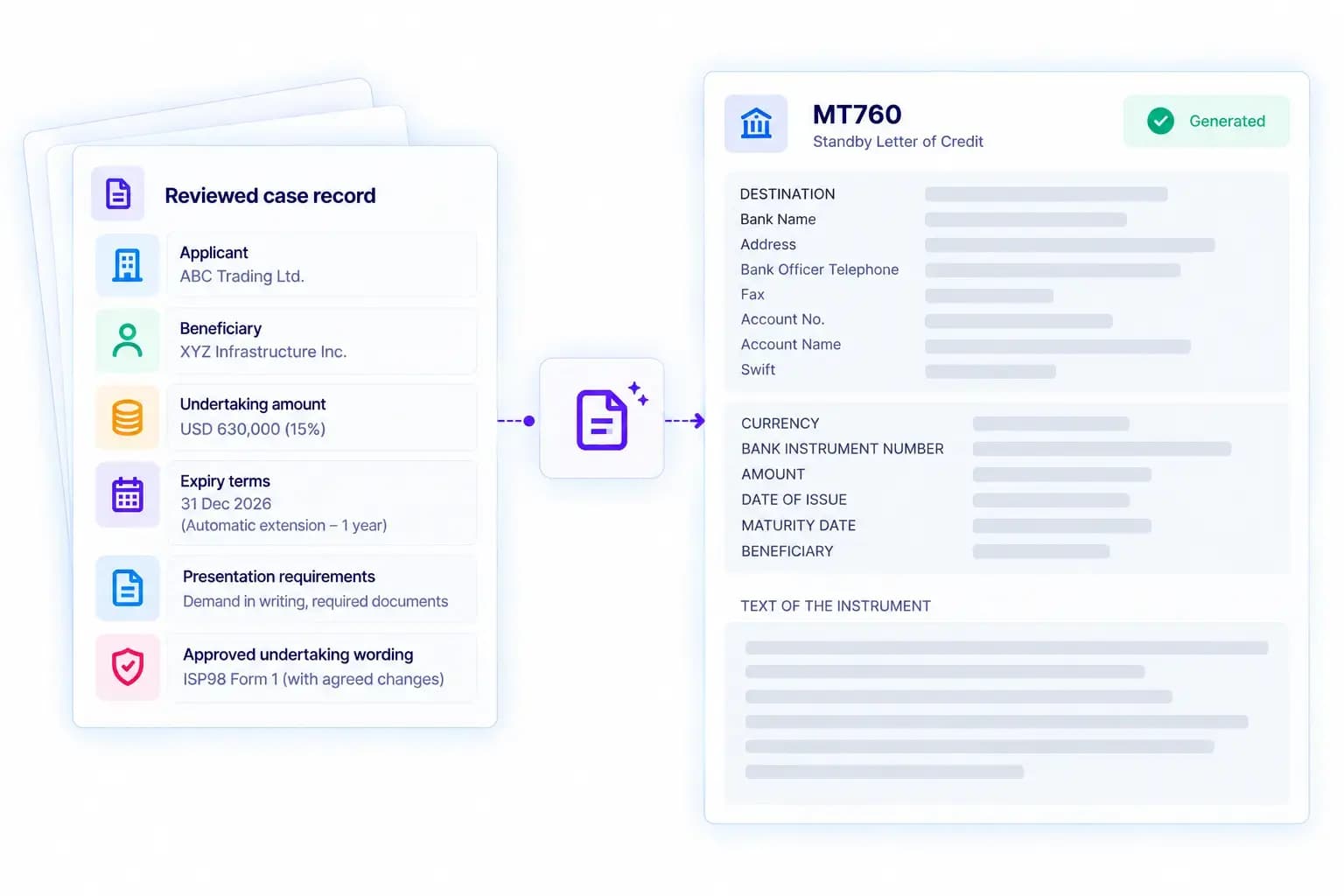
Prepare the MT760
Generate the MT760 directly from the reviewed case record. Applicable rules, applicant and beneficiary details, undertaking amount, expiry terms, presentation requirements, and approved undertaking wording are carried into the relevant message fields without officers re-entering the information. For beneficiary-specified wording, the undertaking text is prepared after identified deviations have been resolved or approved.
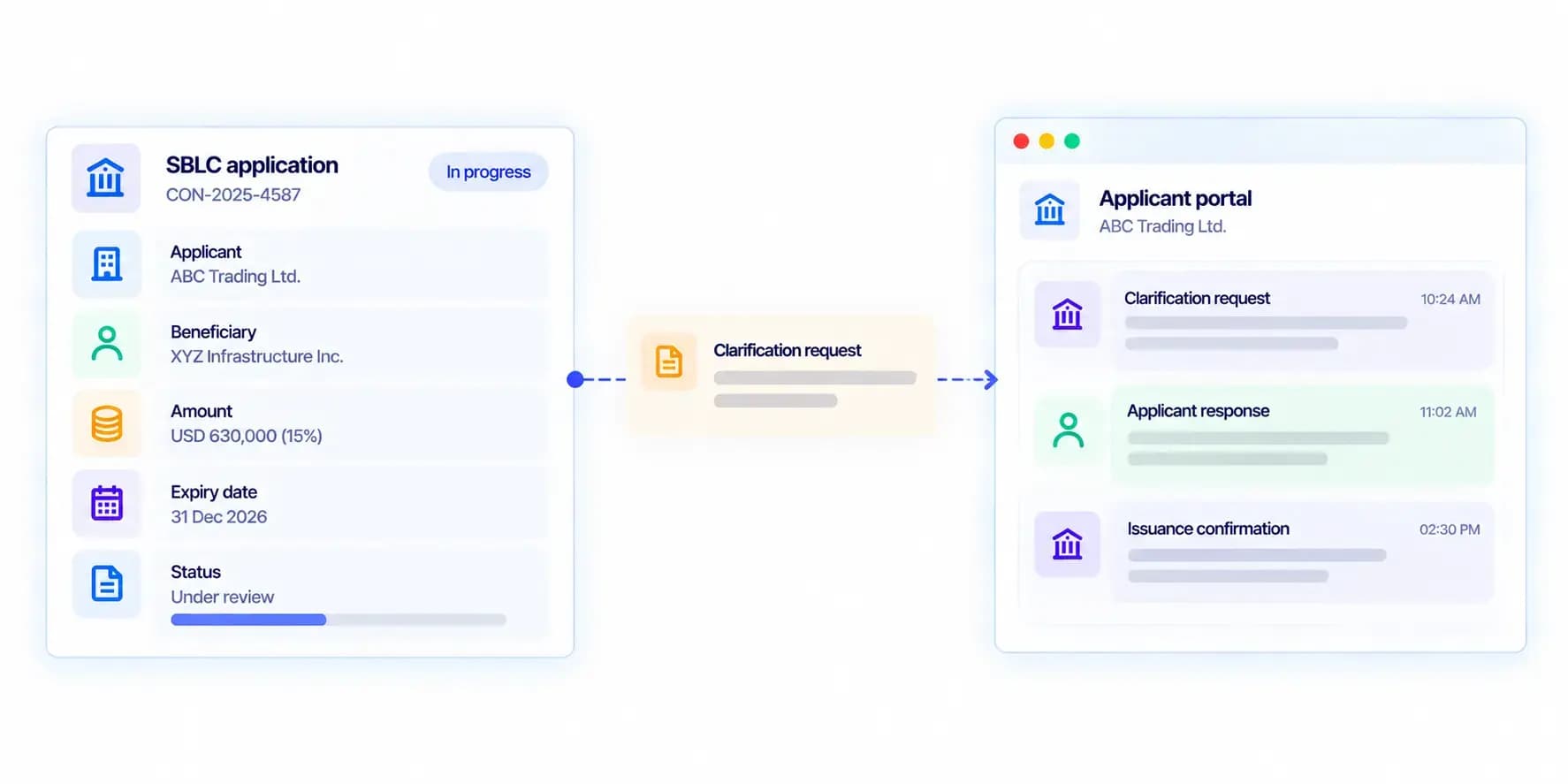
Keep applicant communication connected to the case
Send clarification requests, wording deviations, status updates, and issuance confirmations from the same workflow. When information is missing or inconsistent, the applicant receives a specific request explaining exactly what needs to be confirmed or corrected, and responses stay attached to the case. Where the Customer Trade Portal is deployed, these interactions run directly through the applicant's dashboard.
The ISP98 checks, then the MT760 — in one pass
Amount vs the underlying transaction
The requested standby amount is compared with the security the underlying deal actually calls for. A 15% standby against a contract requiring a 10% performance security is flagged before drafting — not discovered later by a credit officer reading two documents side by side.
Non-documentary conditions
A clause conditioning payment on a fact — “if the contractor is in breach” — with no document named to evidence it is flagged for conversion into a documentary requirement. (Rule 4.11)
Independence of the undertaking
Wording that makes the bank's obligation depend on the underlying contract's performance, rather than on a document presented, is flagged before it is ever drafted into the text. (Rule 1.06)
Expiry and auto-extension
A missing expiry date, or an auto-extension clause with no defined non-extension mechanism, is flagged as exposure that can sit on the book indefinitely.
Beneficiary-format deviations
Where the request carries a beneficiary-specified text, every clause that departs from bank-approved standard wording is listed individually — each with the risk it introduces and the bank's acceptable alternative.
Field-by-field MT760 drafting
The reconciled record populates the message directly: 40C set to ISPR, parties into 50/59, the checked amount into 32B, tenor into 23B/31B/35G, demand mechanics into 45C, and approved text into 77U — sourced and checked, not typed from scratch.
Improve how the bank handles SBLC issuance
Reduce manual document review
Read, extract, and reconcile information across the application, underlying transaction, and beneficiary wording without officers comparing every document manually.
Catch issues before issuance
Surface amount inconsistencies, ISP98-related issues, expiry concerns, and wording deviations before the undertaking reaches final approval.
Reduce manual drafting
Prepare the MT760 from reviewed case data instead of requiring officers to enter approved information field by field.
Standardize issuance across teams
Apply the same review process, checks, and bank-approved wording across SBLC requests while keeping documents, decisions, and applicant communication in one case.
Move from request to issuance-ready MT760
See how ArgusTrade can process the SBLC application, underlying transaction documents, beneficiary wording, issuance checks, and MT760 drafting in one workflow. Send us a real SBLC request — application, underlying contract, and beneficiary wording if you have all three — and we'll show you the checks it triggers and the MT760 it drafts.