
Know what's actually moving, before your bank finances it
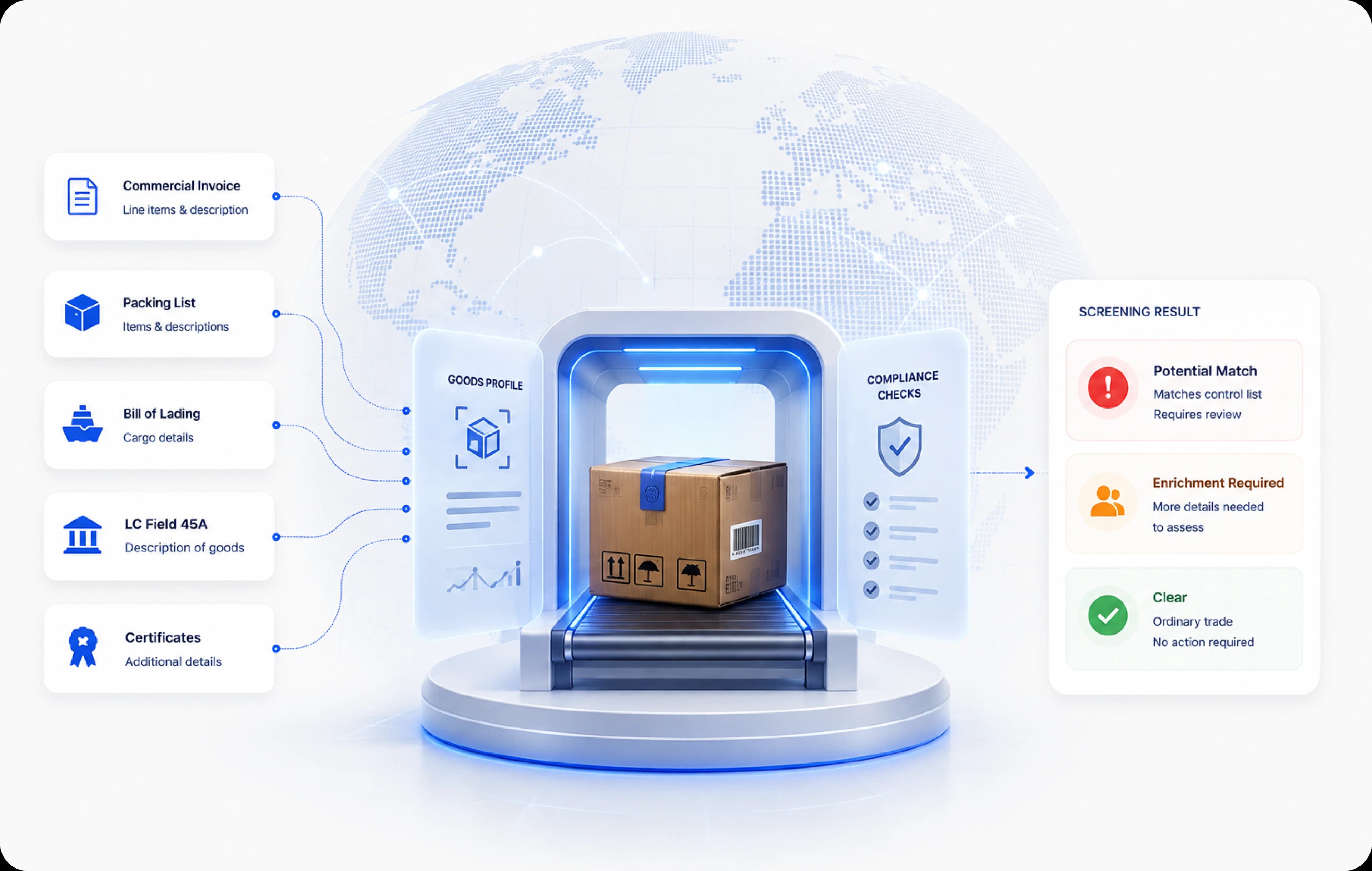
ArgusTrade classifies goods descriptions across trade documents and screens them against export control, dual-use, and sectoral sanctions requirements. Every finding includes the applicable regulatory reference, supporting evidence, and classification rationale, enabling consistent and auditable compliance decisions.
Why banks use ArgusTrade
Screen the goods, not just the parties
Sanctions screening identifies who is involved in a transaction. Goods screening identifies what is being traded. ArgusTrade evaluates goods descriptions across invoices, packing lists, transport documents, and Letters of Credit to identify controlled goods and export-control risks.
Built for trade documents
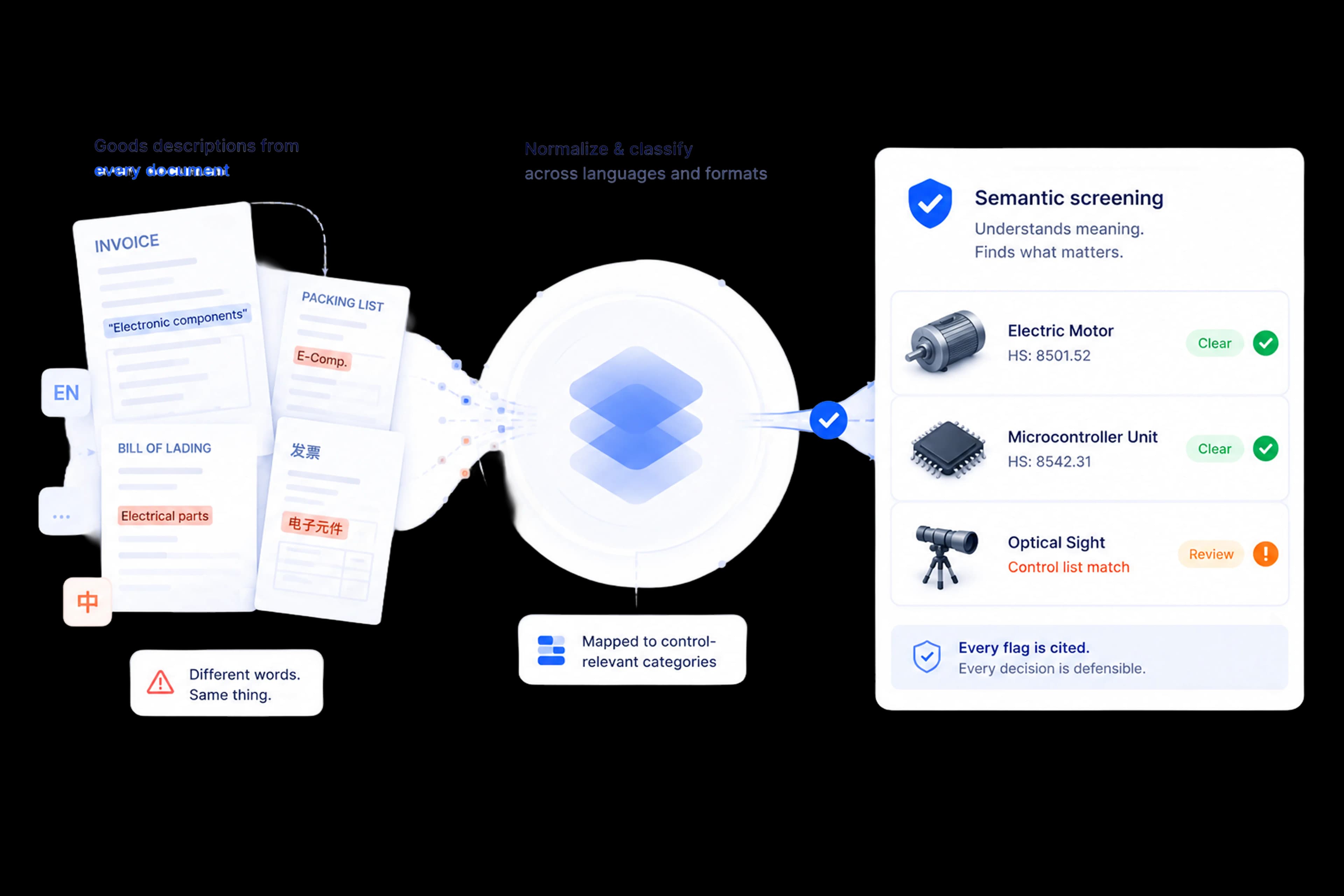
Goods descriptions rarely match control lists directly. ArgusTrade classifies free-text, abbreviated, multilingual, and technical descriptions into export-control categories while identifying descriptions that require additional information.
Cited findings
Every goods alert includes the applicable export-control framework, matching category, supporting evidence, and classification rationale, allowing compliance teams to review and escalate findings with confidence.
Consistent document validation
ArgusTrade compares goods descriptions across invoices, packing lists, transport documents, and LC terms to identify inconsistencies that may indicate documentation issues or potential evasion.
Export control risks are difficult to identify during trade processing
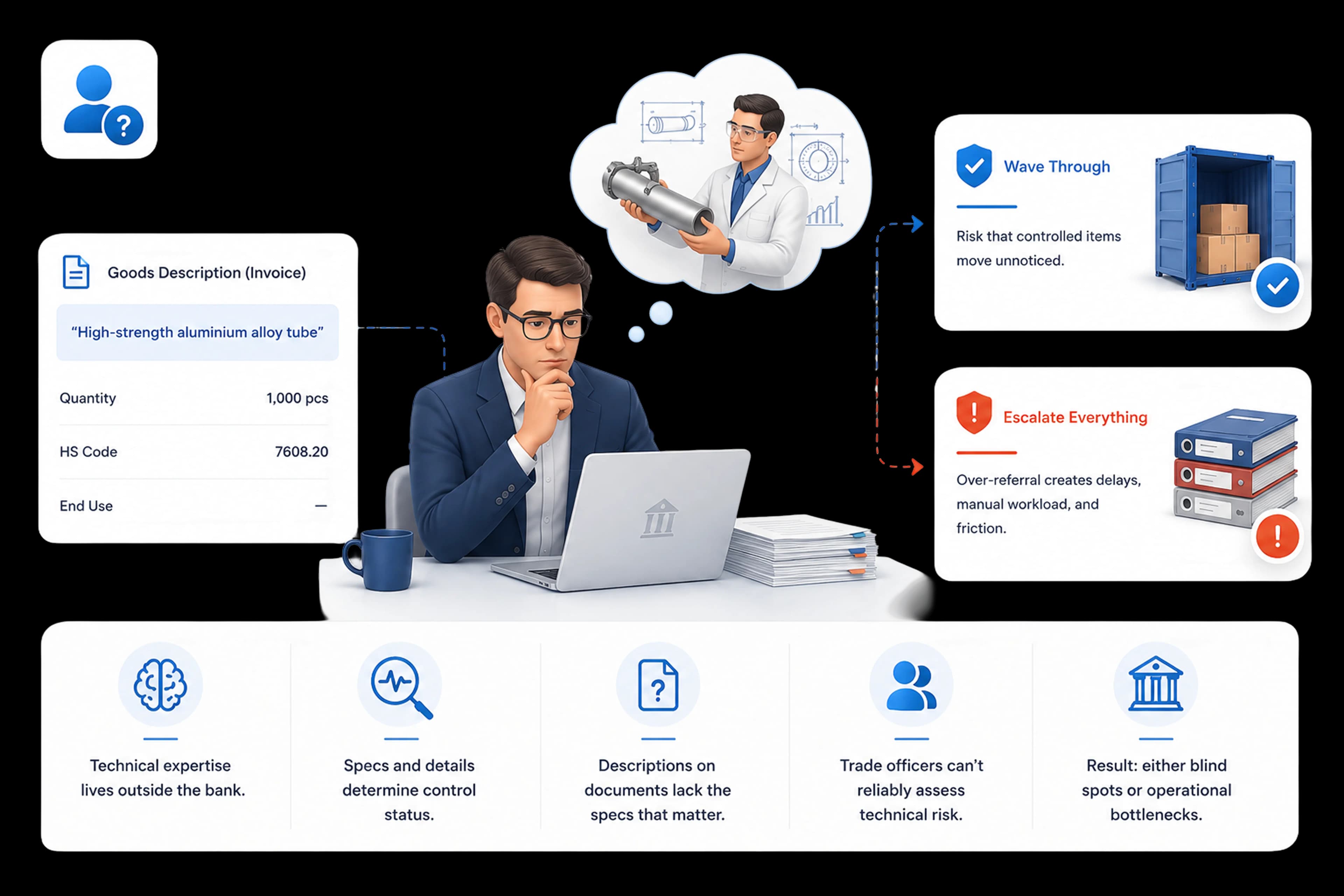
Technical goods require specialist knowledge
Determining whether an item is controlled often depends on technical specifications that are difficult to assess during routine trade processing.
Incomplete product descriptions
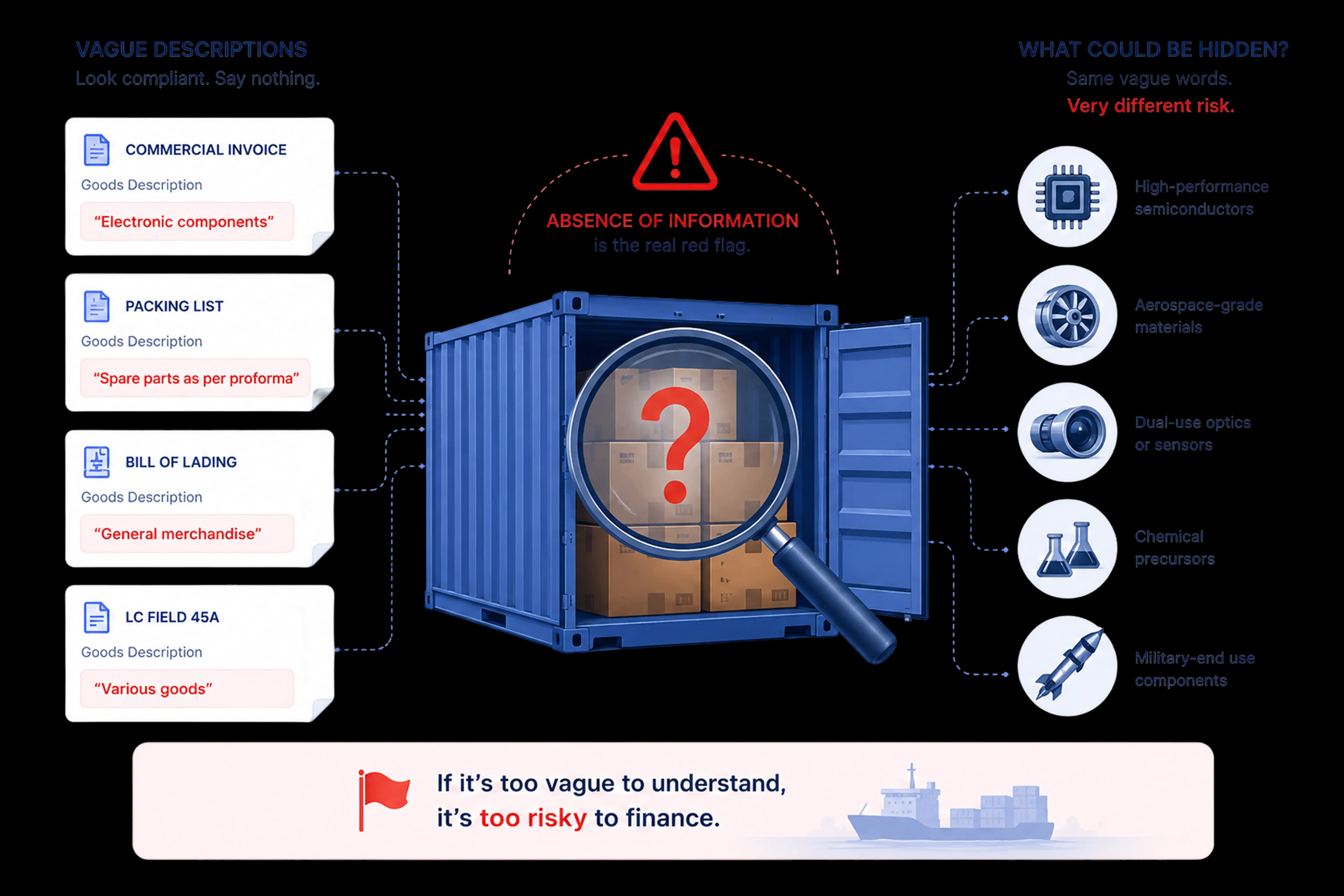
Goods descriptions such as “electronic components” or “industrial spare parts” provide insufficient information for export-control decisions. Generic descriptions can themselves represent compliance risk.
Evolving regulatory frameworks
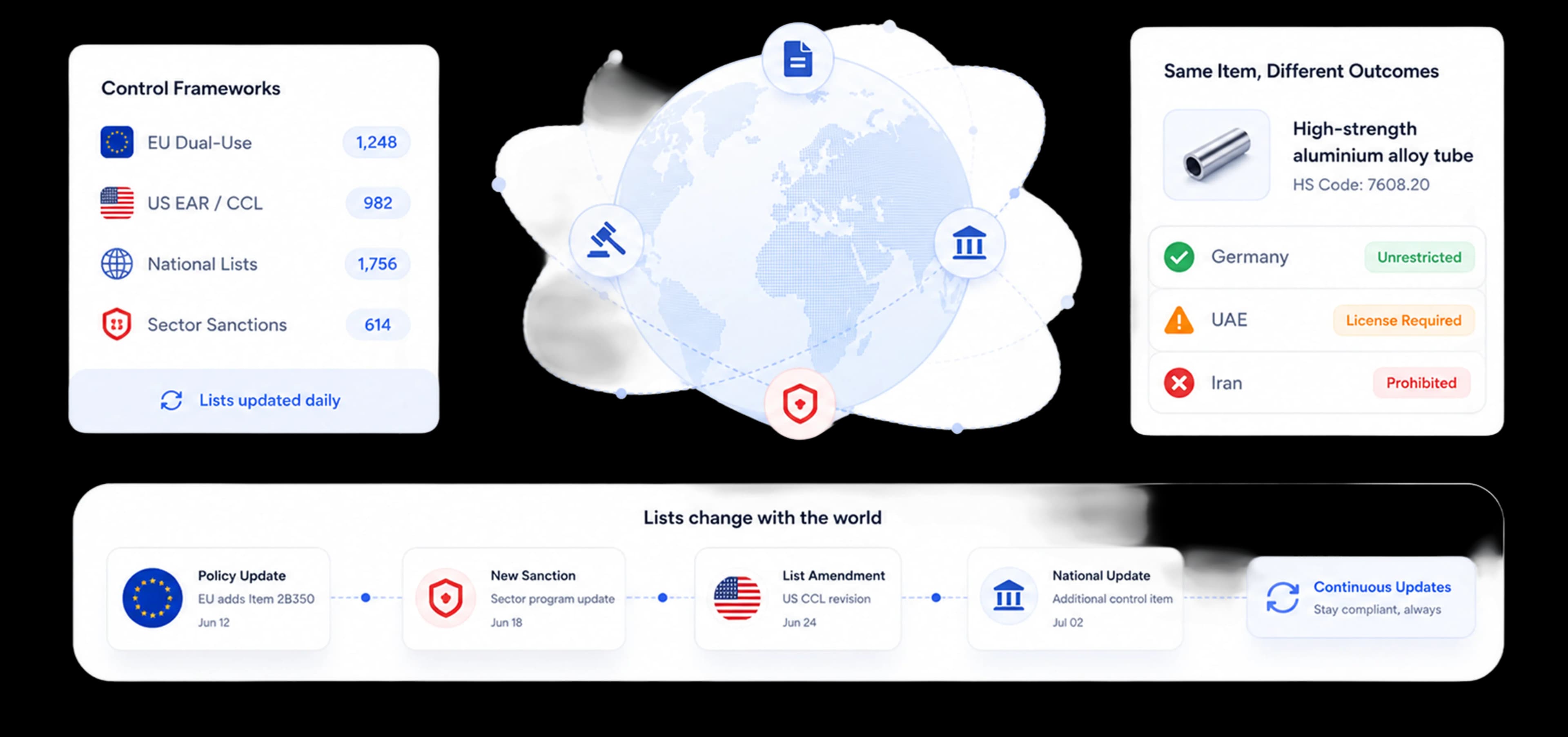
Dual-use regulations, export-control lists, and sector sanctions continue to evolve across jurisdictions, making manual review increasingly difficult.
Keyword matching is unreliable
Traditional keyword screening generates unnecessary alerts while missing alternative terminology, abbreviations, and multilingual descriptions.
Context determines risk
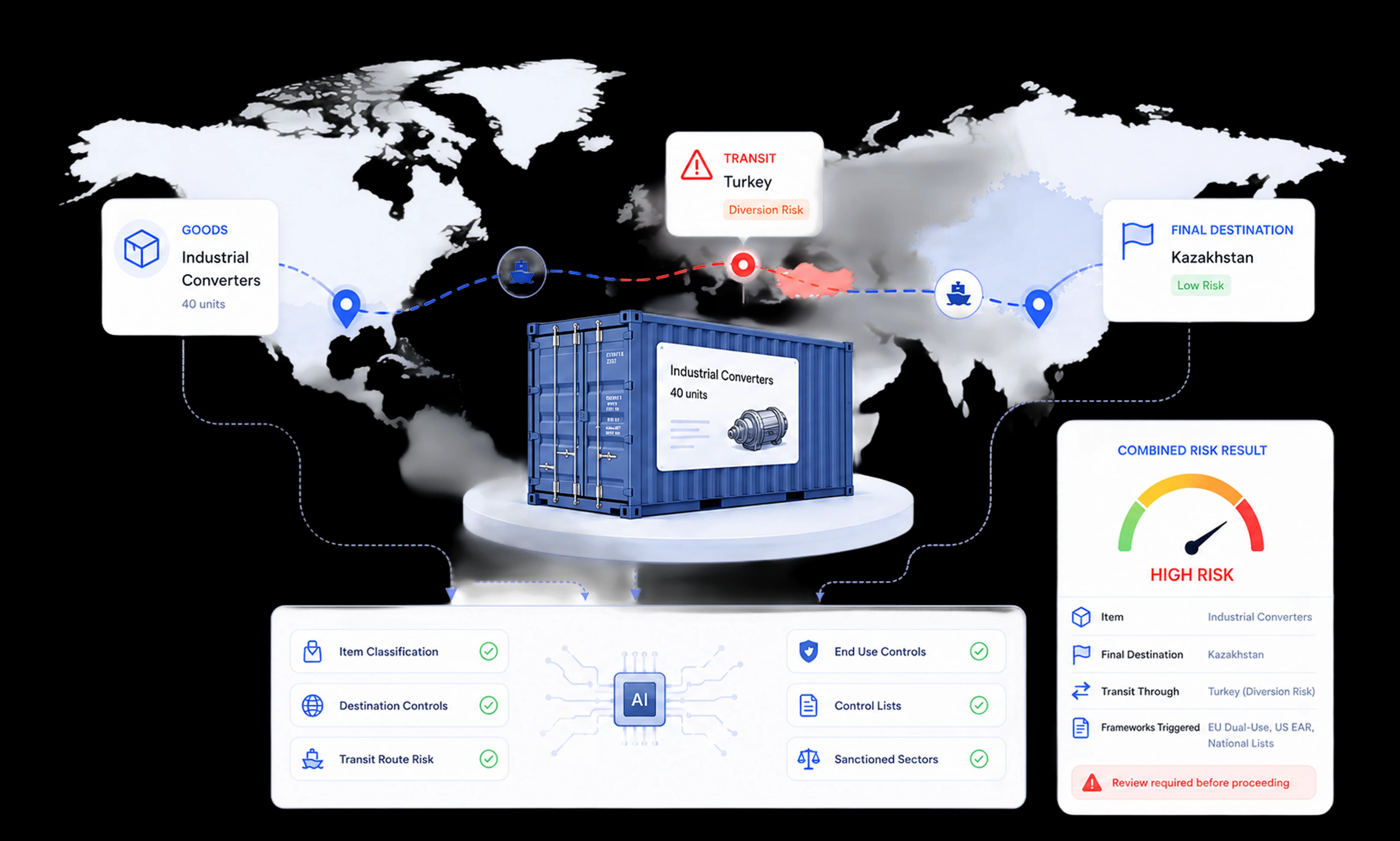
The same goods may present different risks depending on destination country, consignee, end use, or transshipment route. Effective screening requires evaluating these factors together.
Increasing regulatory scrutiny
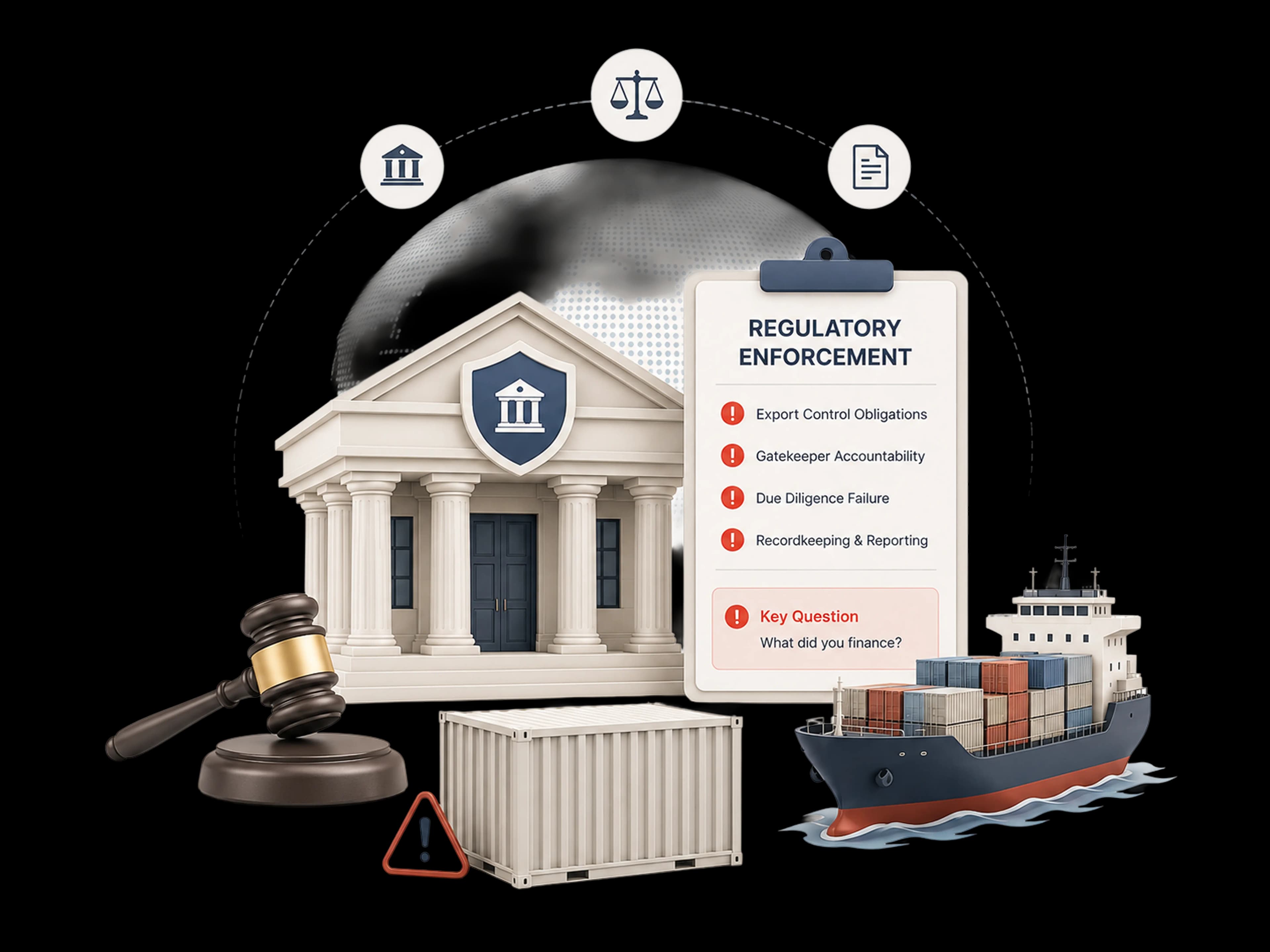
Financial institutions are increasingly expected to demonstrate structured controls for export-control compliance alongside sanctions screening.
Better export control decisions
Screen every goods description
Evaluate every extracted goods description across every transaction against configured export-control and dual-use frameworks.
Improve classification accuracy
Use AI classification instead of keyword matching to reduce false positives while identifying higher-risk goods more consistently.
Standardize export-control reviews
Provide trade and compliance teams with consistent classification, supporting evidence, and framework references for every finding.
Identify incomplete descriptions
Automatically flag vague or incomplete goods descriptions and generate enrichment requests as part of the workflow.
Preserve operational efficiency
Run goods screening during document processing without introducing additional review steps for compliant transactions.
Strengthen audit readiness
Maintain a complete record of every classification, framework reference, reviewer action, and final decision.
Proven results
Purpose-built for goods screening
Goods extraction and normalization
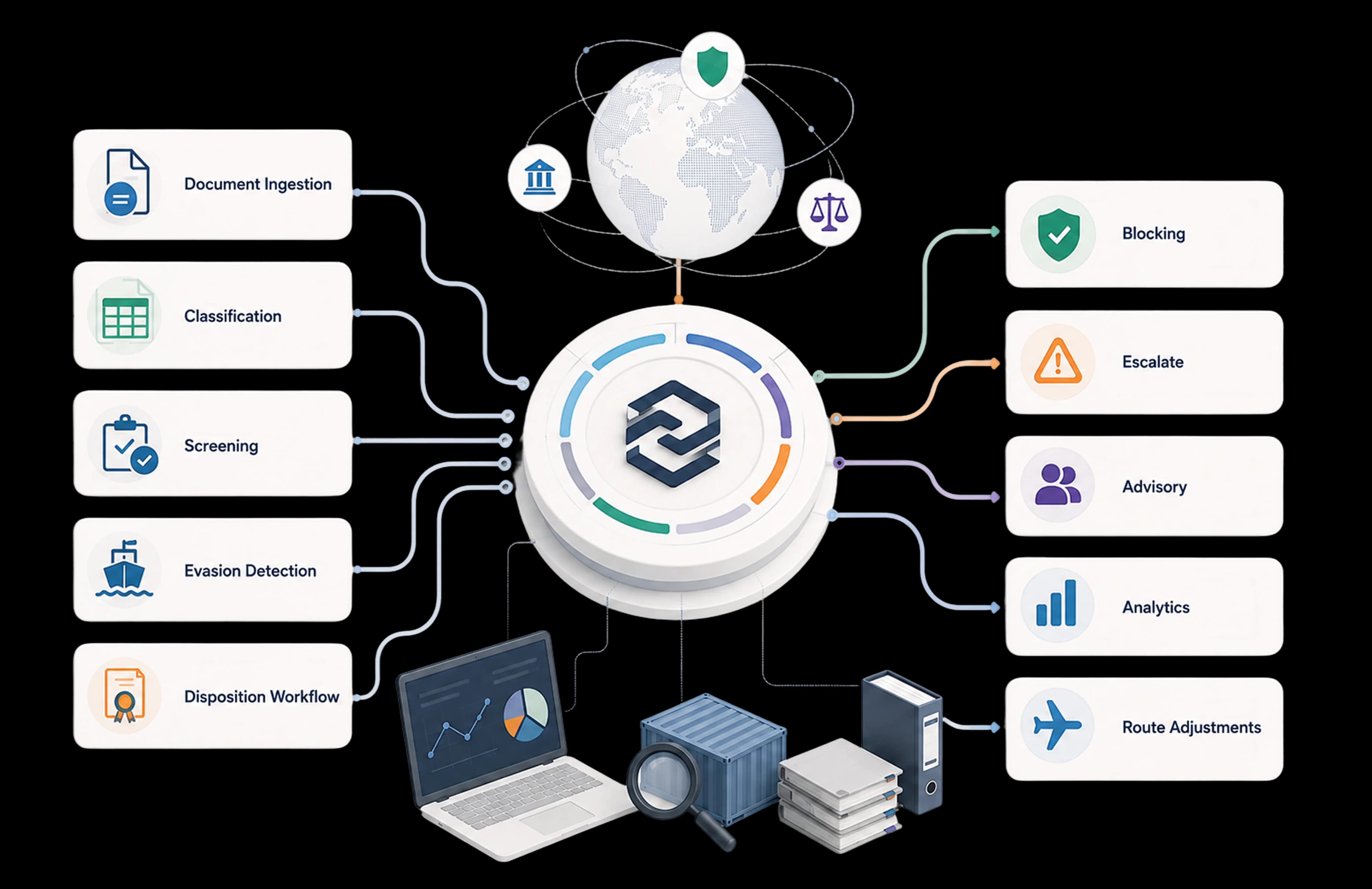
Extract goods descriptions from LC field 45A, invoices, packing lists, transport documents, and supporting certificates. Normalize trade abbreviations, multilingual descriptions, and product terminology while validating declared HS codes against document content.
Classification and screening
Classify goods descriptions into export-control categories and screen against configured frameworks, including EU Dual-Use Regulations, US EAR/CCL, national control lists, and sanctioned-sector programs. Evaluate results within the context of destination countries and transshipment routes.
Evasion indicators
Identify vague descriptions, cross-document inconsistencies, and potential attempts to obscure controlled goods. Flag descriptions requiring additional information before processing continues.
Workflow controls
Classify findings as advisory, escalation, or blocking according to institutional policy. Support configurable approval gates, maker-checker workflows, and four-eyes review where required.
Audit and governance
Record every classification decision, framework version, reviewer action, and supporting rationale. Portfolio dashboards provide visibility into goods-related risks across customers, trade corridors, and industry sectors.
How it works
- Line 1
- Aluminium alloy tube
- Line 2
- “Electronic components”
- Line 3
- CNC spindle assembly
- Consignee
- Country: high-risk
- HS declared
- 7608.20
- Grade
- 7075-T6
- Transhipment
- diversion-risk hub
- Cross-doc
- drift detected
Extract and classify
ArgusTrade extracts every goods description, HS code, quantity, and specification from trade documents. Descriptions are normalized and classified into export-control categories using AI.
Screen in context
Goods are evaluated against applicable export-control frameworks based on destination country, routing, and transaction context. Incomplete descriptions and cross-document inconsistencies are identified automatically.
Review and decide
Compliant goods proceed without interruption. Potential matches generate cases with supporting evidence, framework references, and configurable workflow controls. Compliance teams review, approve, escalate, or request additional information as required.
Monitor and report
Framework updates automatically trigger re-screening where applicable. Every classification, finding, and reviewer decision is retained within a complete audit record while dashboards provide portfolio-level visibility into goods-related risks.
See how ArgusTrade screens goods across your trade transactions
Bring a real trade transaction. We'll show how ArgusTrade classifies goods descriptions, evaluates export-control requirements, and identifies controlled goods with supporting evidence and complete auditability.