
Import & Export LC Presentation, Done in Minutes
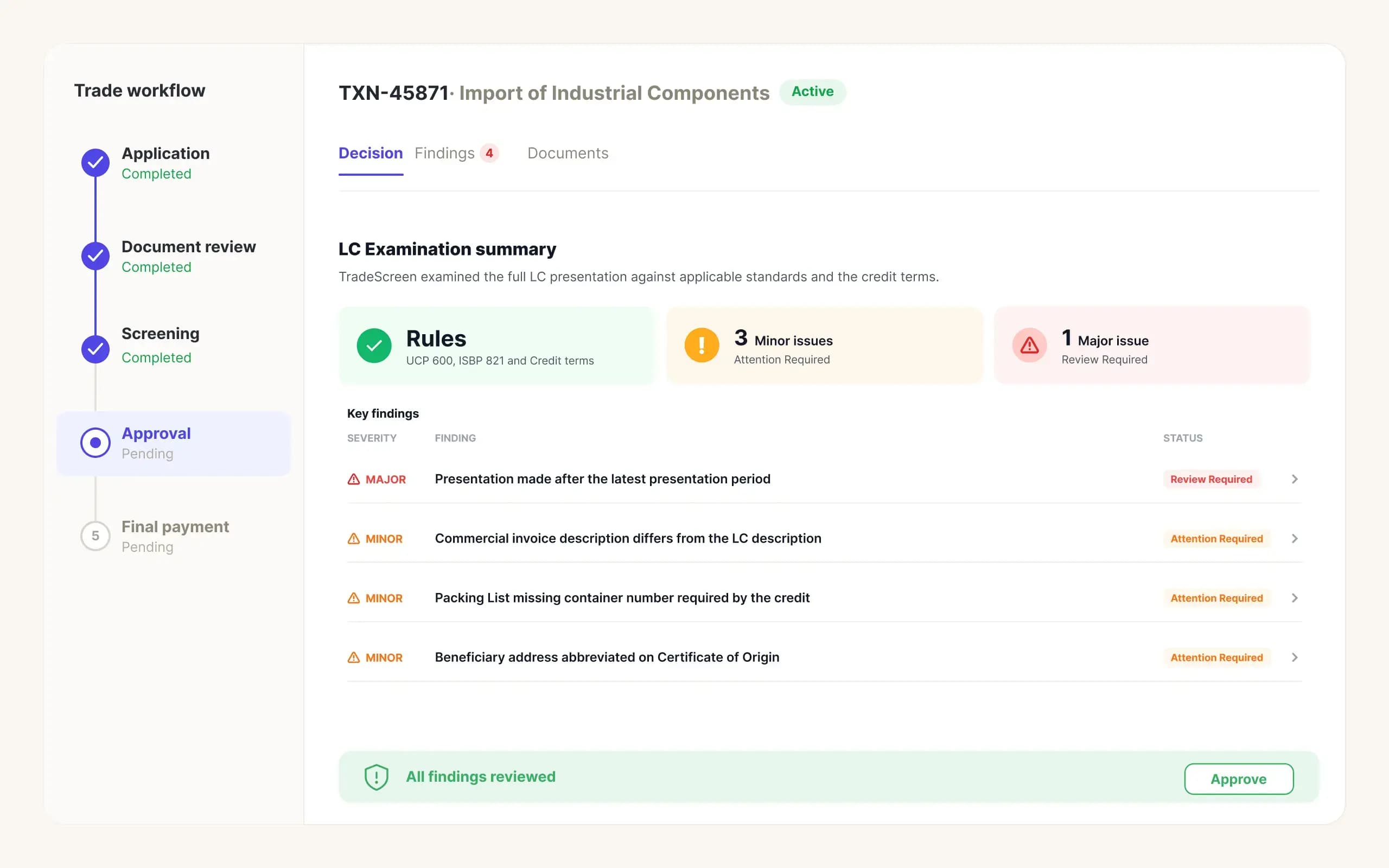
ArgusTrade examines every document, every field, and every applicable rule against UCP 600, ISBP 821, and LC terms. Every finding includes supporting evidence and regulatory citations, allowing document checkers to focus on decisions rather than document review.
Why banks use ArgusTrade
Complete document examination
Every field on every document is evaluated against the applicable LC terms, UCP 600, and ISBP 821. Every document receives the same level of scrutiny, regardless of presentation size or complexity.
Cited findings
Each discrepancy includes the applicable UCP article or ISBP paragraph, supporting evidence, affected fields, and a clear explanation. Findings are fully traceable and audit-ready.
Human review remains in control
ArgusTrade identifies, classifies, and documents discrepancies. Document checkers review, approve, override, or annotate findings before making the final decision.
Consistent decisions
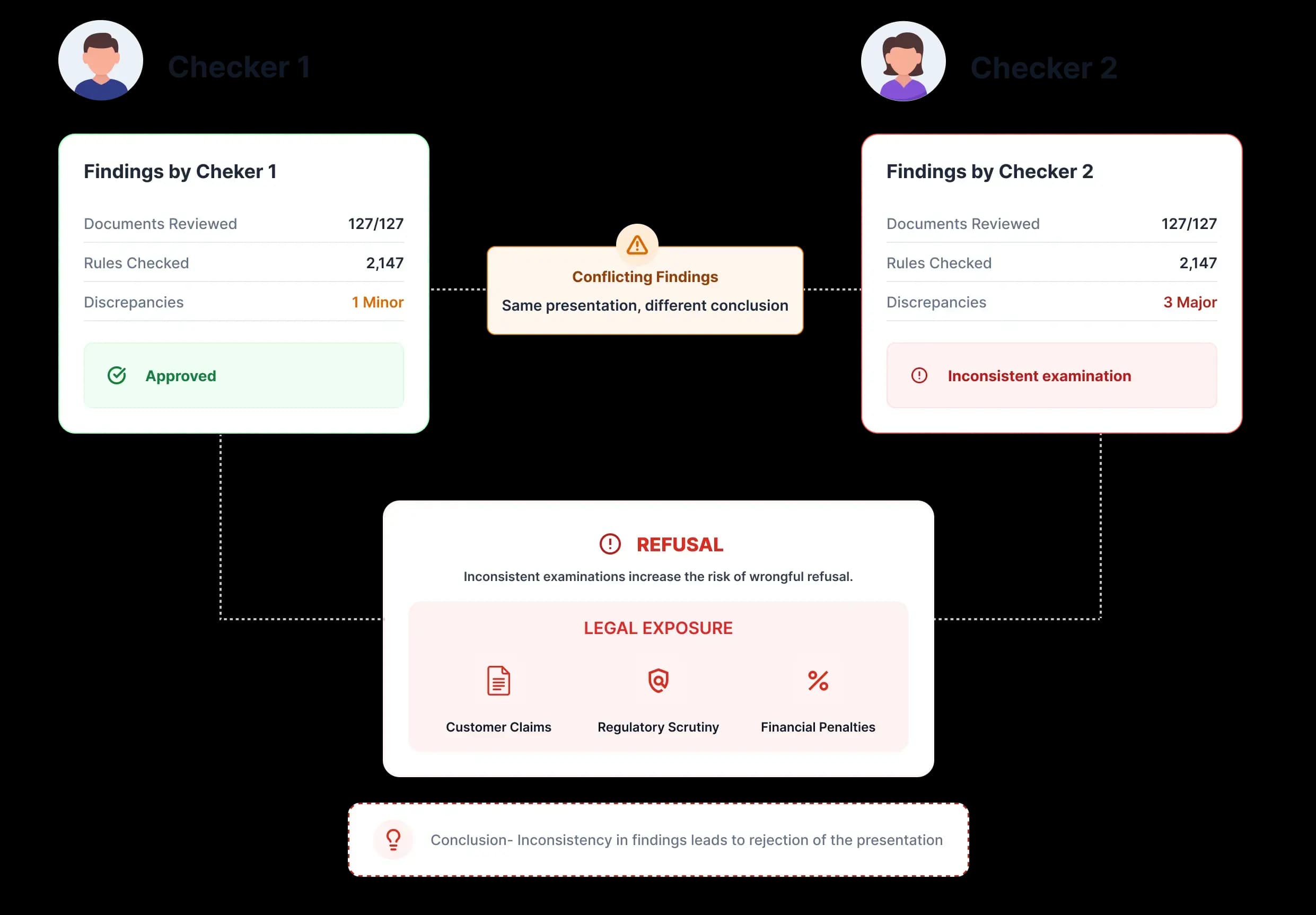
Apply the same examination standards across teams, branches, and shifts to reduce reviewer-to-reviewer variation.
The operational challenges of LC document examination
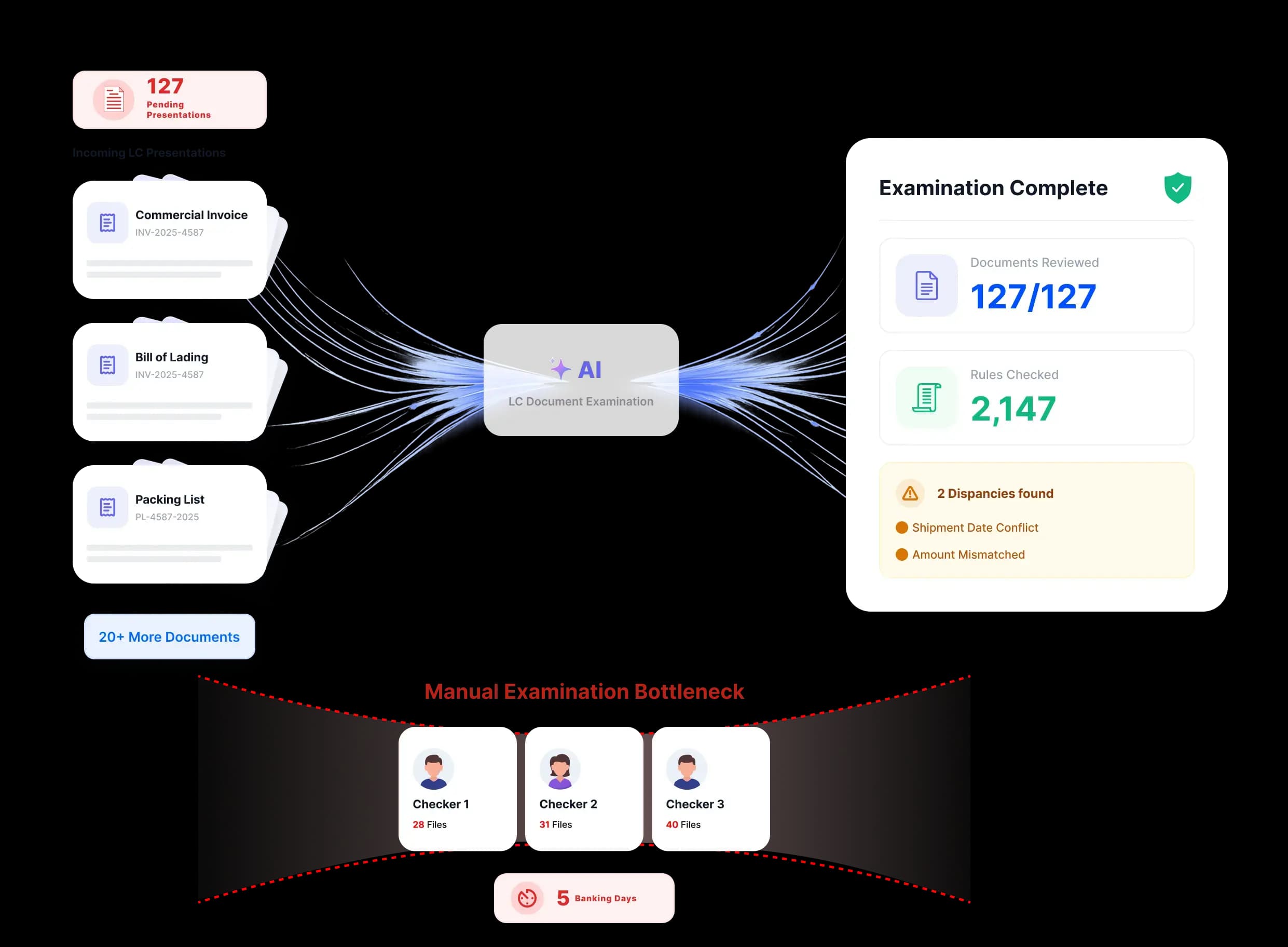
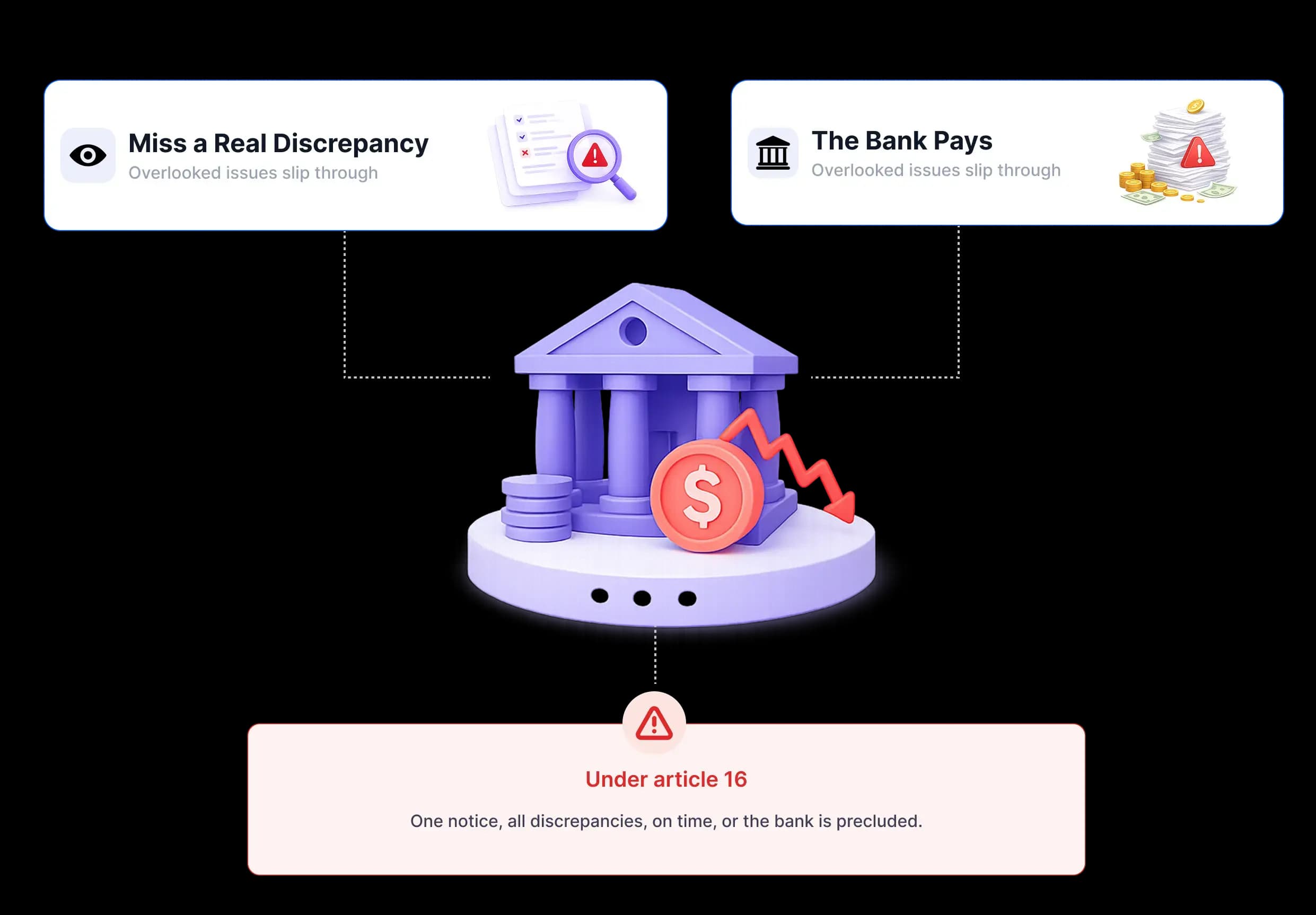
A single documentary credit presentation can include more than 20 documents and over 100 pages. Under Article 14(b) of UCP 600, banks have five banking days to examine the presentation. At the same time, experienced trade operations specialists are becoming harder to replace.
Increasing workloads
Growing presentation volumes create backlogs, overtime, and operational pressure, increasing the likelihood of missed discrepancies.
Loss of expertise
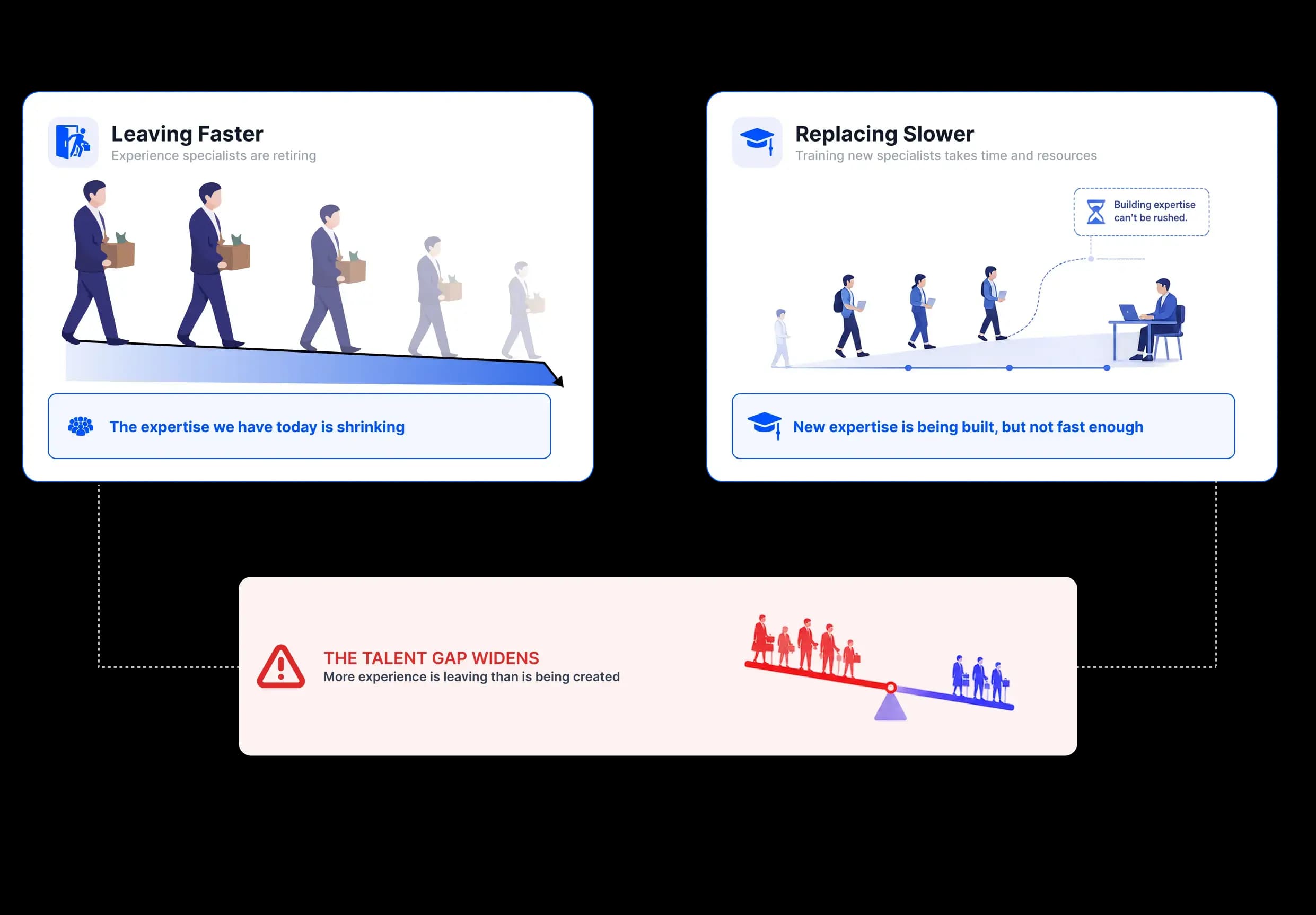
Many institutions depend on a small group of experienced document checkers approaching retirement, making it difficult to maintain consistent examination quality.
Inconsistent reviews
Different reviewers can reach different conclusions on the same presentation, creating operational, legal, and customer risk.
Costly errors
Missing a valid discrepancy can result in payment against non-complying documents. Missing the requirements of Article 16 can expose the bank to preclusion risk.
What your trade operations team gains
Faster examination
Reduce document examination from two to four hours per presentation to minutes of automated processing followed by focused human review.
Higher discrepancy detection
Achieve up to 90% discrepancy detection compared with senior document checker benchmark reviews.
Lower operational risk
Generate complete, cited discrepancy reports and consolidated refusal notices that support compliance with Article 16.
Deadline management
Track receipt times, Article 14(b) deadlines, and service-level agreements automatically throughout the examination process.
Greater operational capacity
Process higher presentation volumes without proportionally increasing specialist headcount.
Complete auditability
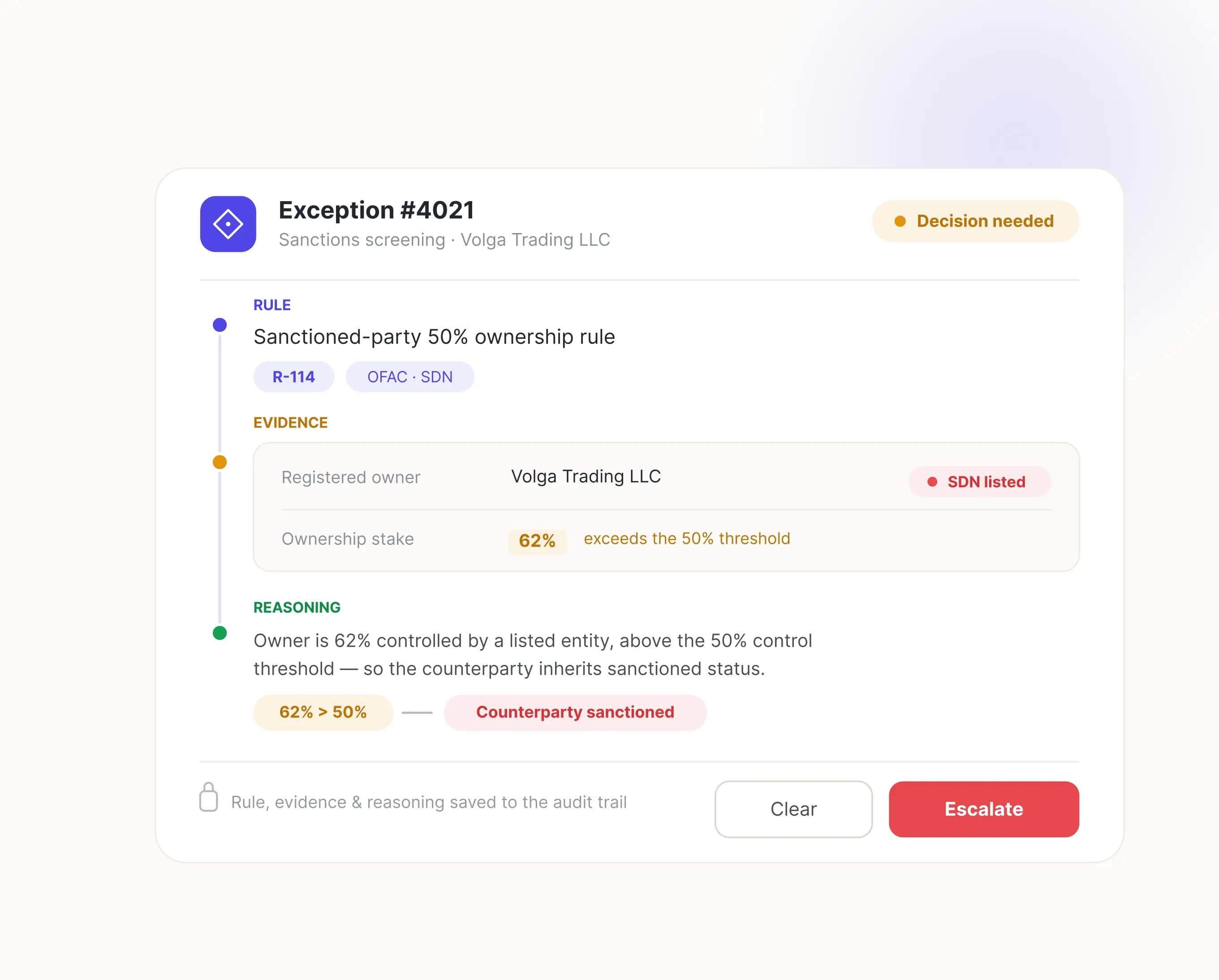
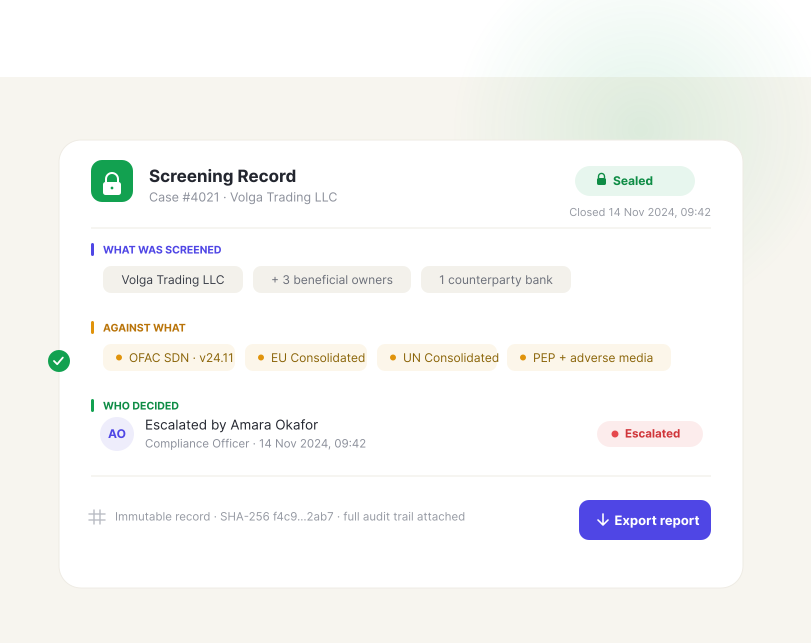
Capture every extraction, finding, reviewer action, override, and final decision with a complete timestamped record.
Performance at scale
How ArgusTrade examines documents
Document ingestion & extraction
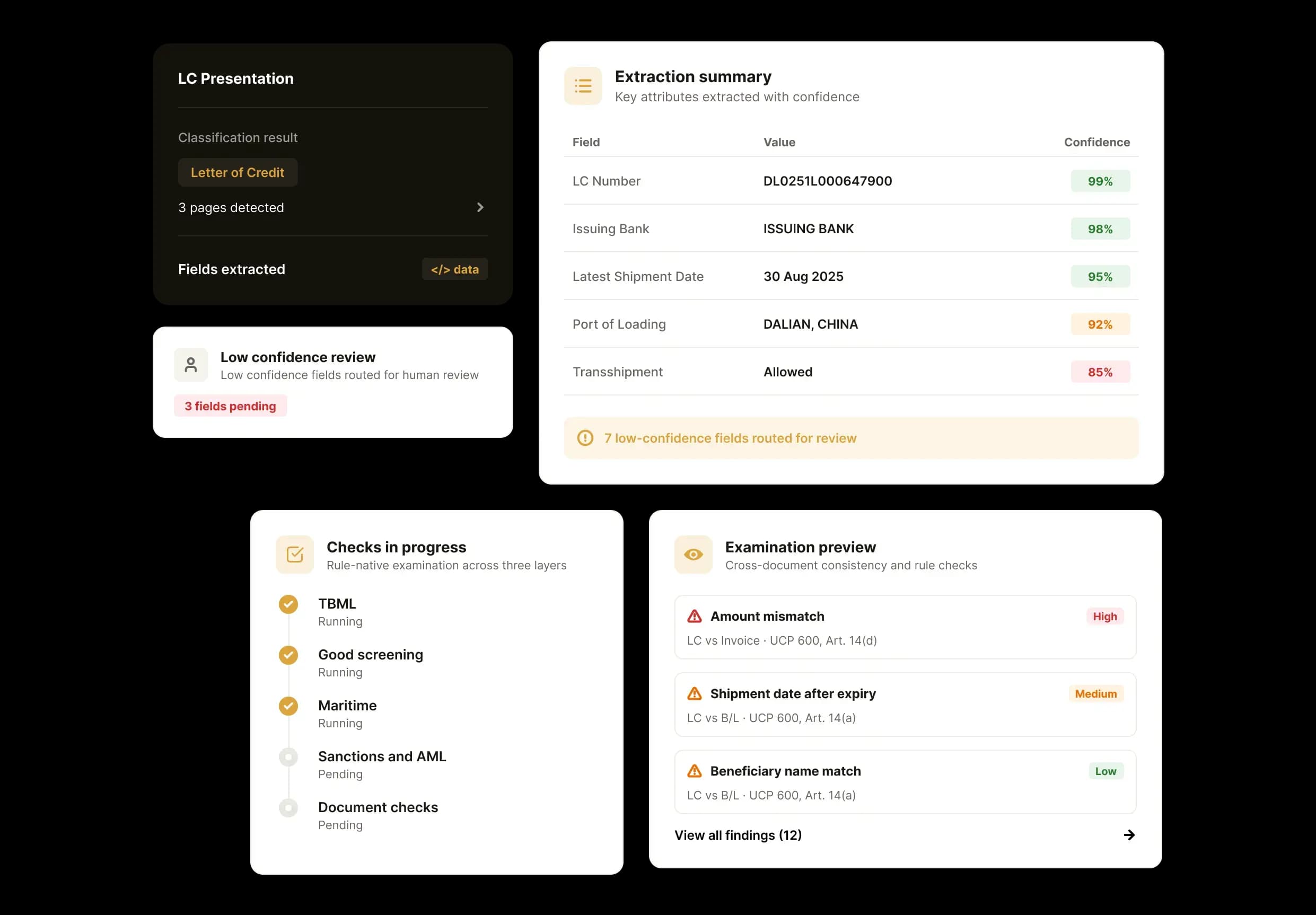
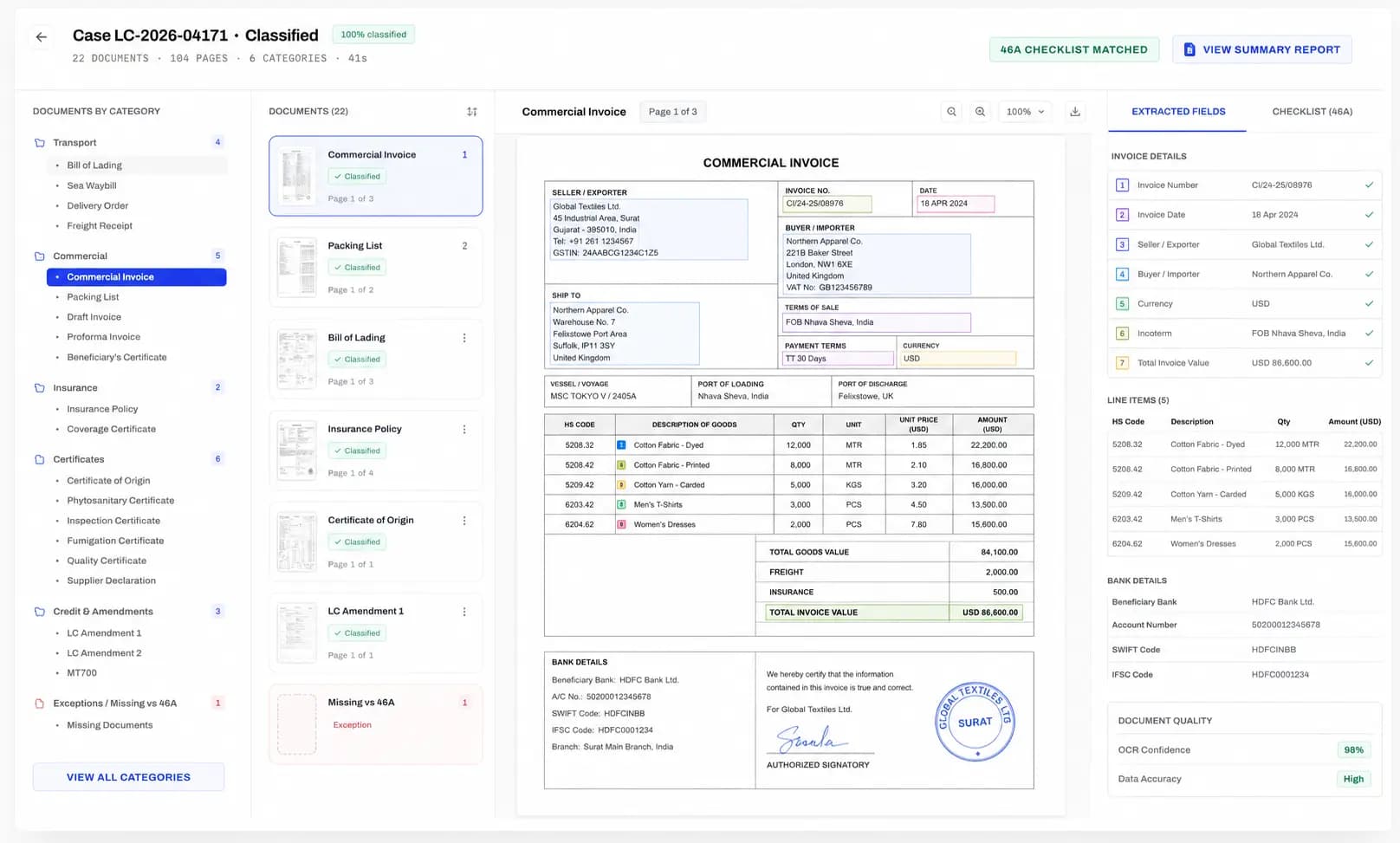
Receive presentations through customer portals, email, API, or SFTP. Automatically classify scanned, photographed, faxed, and digital documents and extract fields without templates. Low-confidence extractions are flagged for reviewer validation.
Rule-based examination
Evaluate every presentation against three rule layers simultaneously: LC terms, UCP 600, and ISBP 821. Validate cross-document consistency across amounts, dates, ports, parties, goods, and document-specific requirements.
Evidence-based findings
Every discrepancy includes supporting evidence, regulatory citations, severity, and a customer-ready explanation to help applicants correct and re-present documents quickly.
Reviewer workflow
Review findings alongside source documents with linked citations, reason codes, maker-checker approval, and Article 14(b) deadline tracking.
Automated refusal notices
Generate MT734-ready refusal notices aligned with Article 16(c). Re-presentations are automatically compared so reviewers only examine documents that have changed.
How it works
Receive and extract
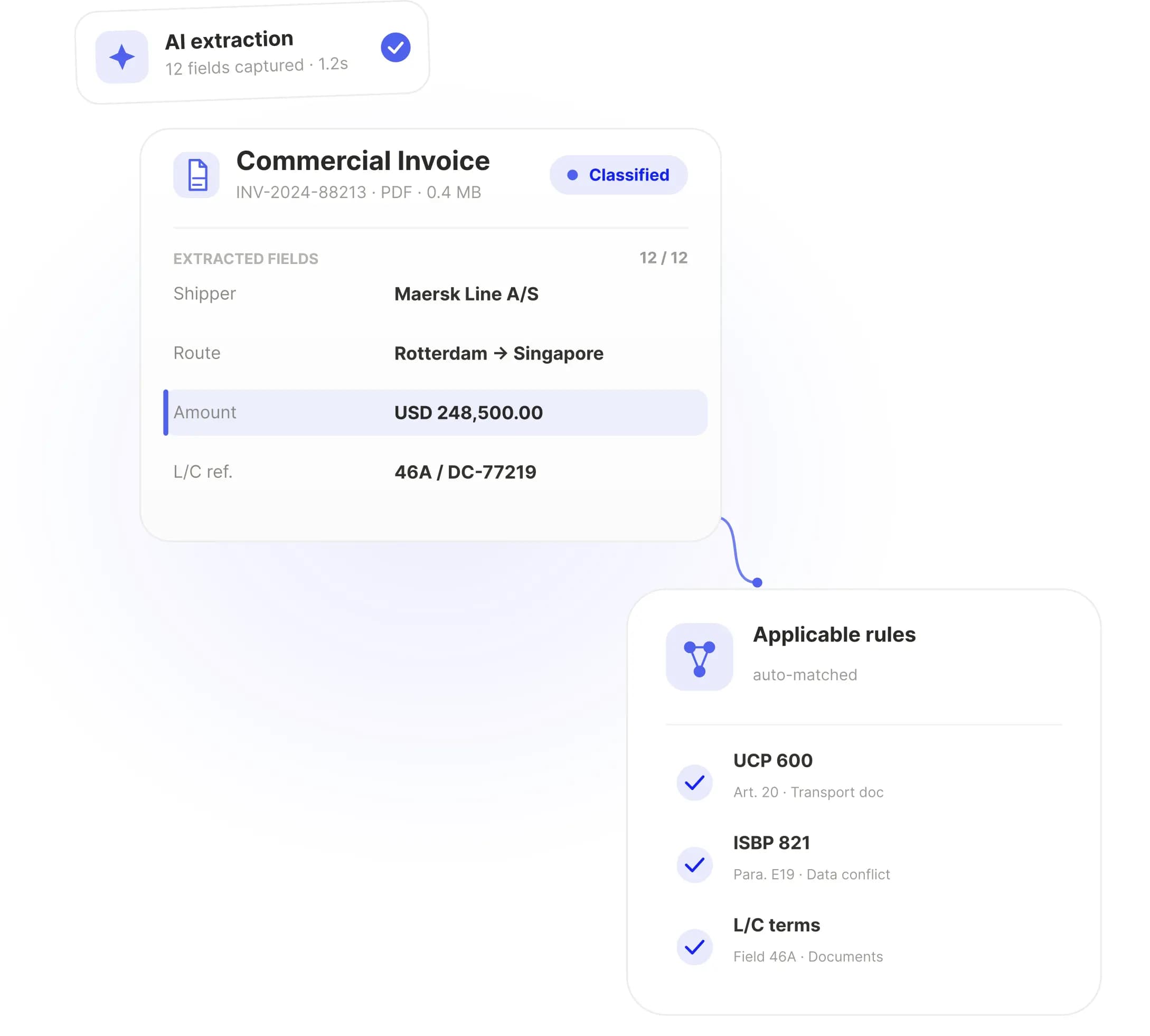
Receipt is timestamped to begin the Article 14(b) examination period. Documents are classified, fields are extracted, and the presentation is matched against the LC requirements to identify missing documents immediately.
Examine
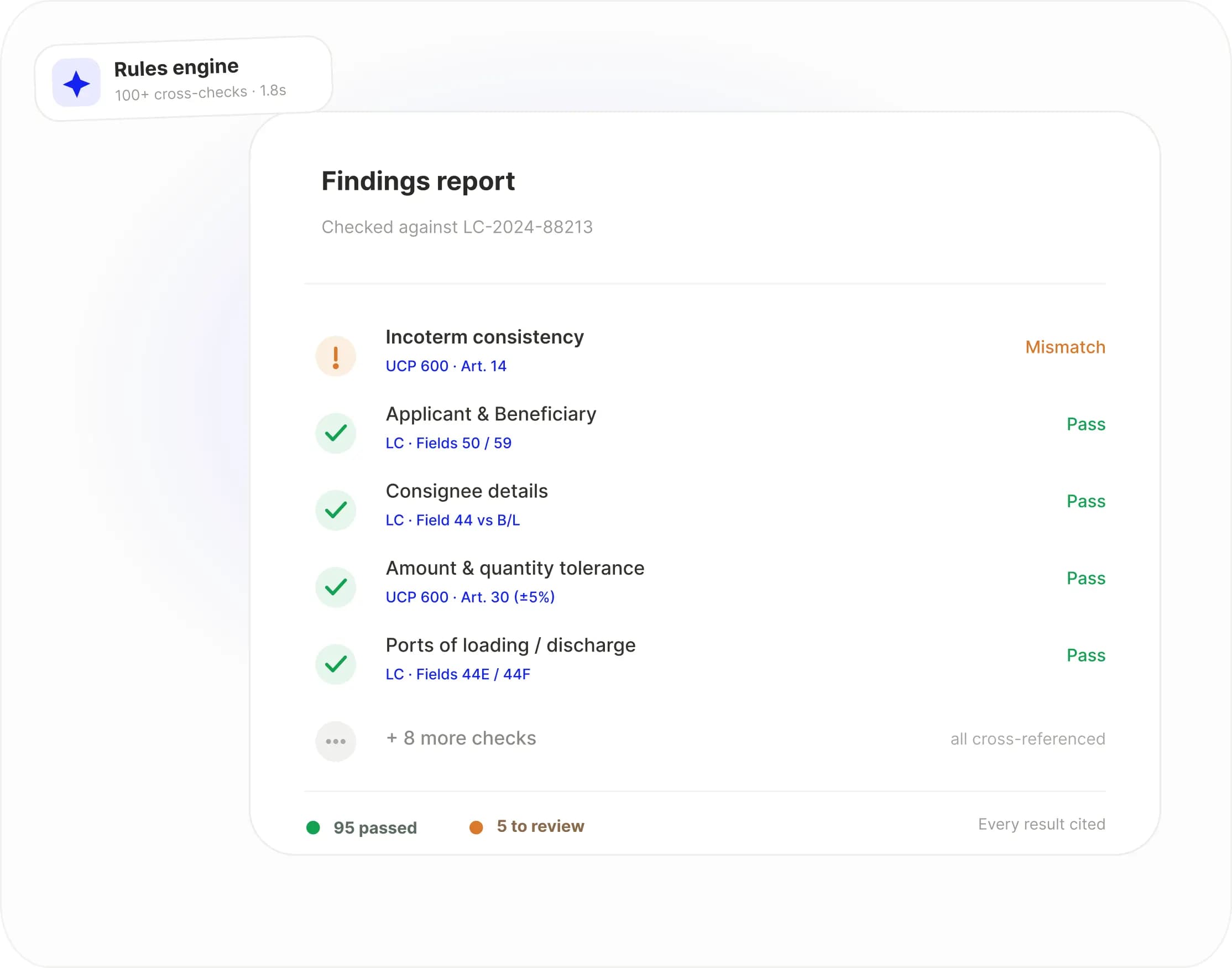
ArgusTrade evaluates the presentation against LC terms, UCP 600, ISBP 821, and cross-document consistency rules before generating a cited findings report.
Review and decide
Document checkers validate findings, record overrides where required, and complete maker-checker approval. Complying presentations proceed to payment, while discrepant presentations receive a drafted Article 16 refusal notice within the examination deadline.
Archive and analyze
The complete examination record is retained for audit. Operational dashboards identify recurring discrepancy trends by customer, issuing bank, corridor, and document type.
Manual examination vs. ArgusTrade
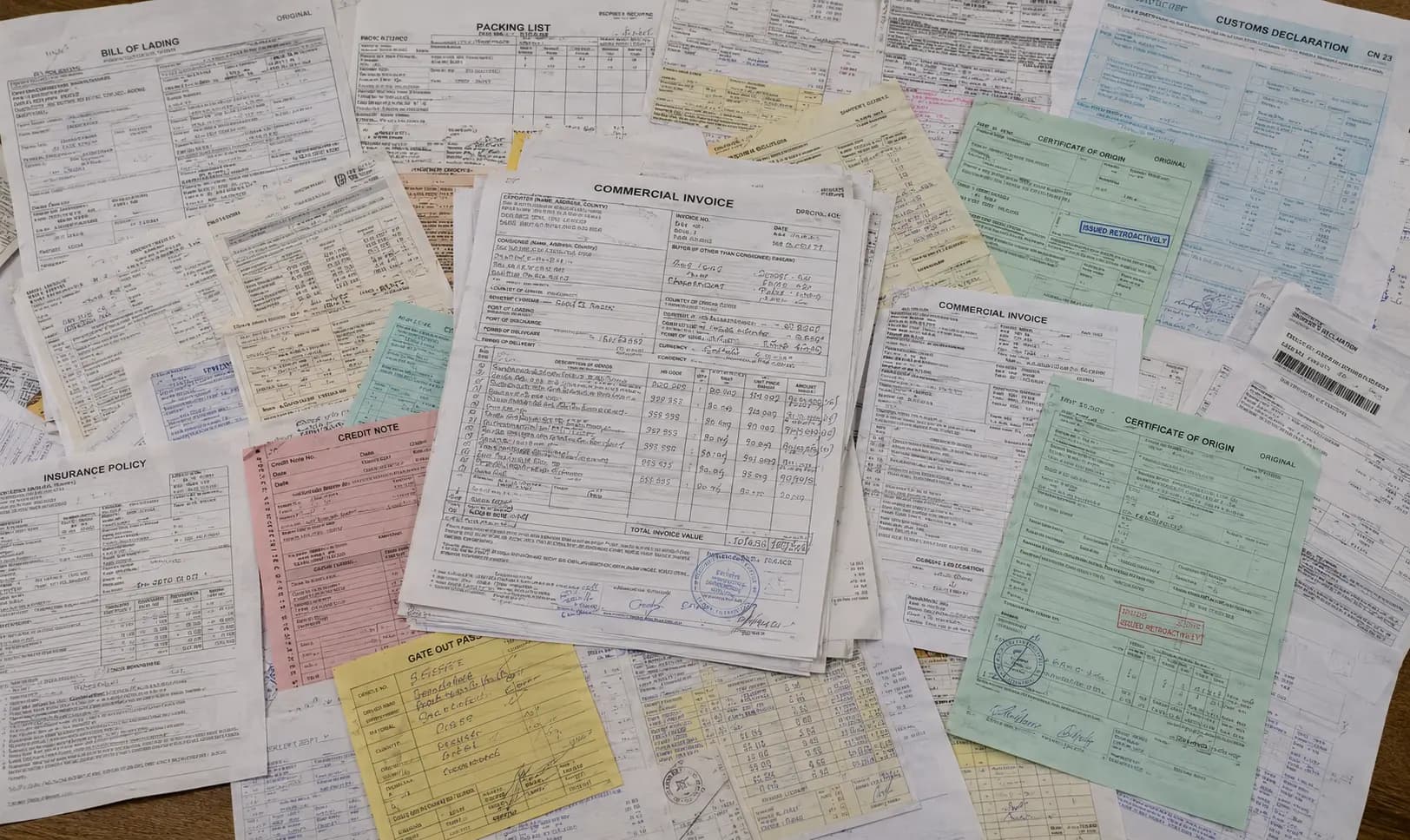
Twenty-two documents arrive as scans, faxes, and phone photos, in no order. ArgusTrade classifies every page, extracts every field, and returns a structured case examined against UCP 600, ISBP 821, and the credit's own terms.
- Examination timeManual examination:2 to 4 hours per presentationArgusTrade:Minutes of processing plus focused review
- CoverageManual examination:Prioritized under deadline pressureArgusTrade:Every field, every document, every applicable rule
- FindingsManual examination:Manual notes and reviewer judgmentArgusTrade:Cited, evidenced, and explained
- ConsistencyManual examination:Varies by reviewerArgusTrade:Standardized across teams and locations
- Article 14(b) deadlinesManual examination:Manual trackingArgusTrade:Automated countdowns and SLA monitoring
- Article 16 refusal noticesManual examination:Prepared manuallyArgusTrade:MT734-ready notices generated automatically
- Re-presentationsManual examination:Complete re-examinationArgusTrade:Review only changed documents
- Knowledge retentionManual examination:Dependent on experienced specialistsArgusTrade:Embedded within the examination rules engine
- Audit trailManual examination:Distributed across files and emailsArgusTrade:Complete, timestamped examination history
See ArgusTrade in action
Examine documentary credit presentations faster with complete auditability. Bring a real documentary credit presentation. We'll show how ArgusTrade applies UCP 600, ISBP 821, and LC terms to identify discrepancies, generate cited findings, and produce an auditable examination record in minutes.